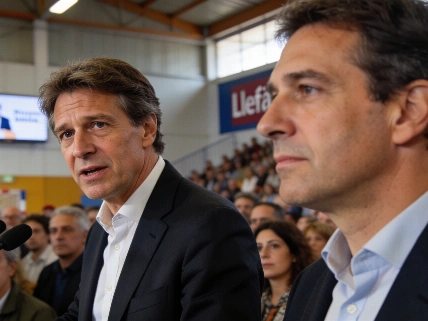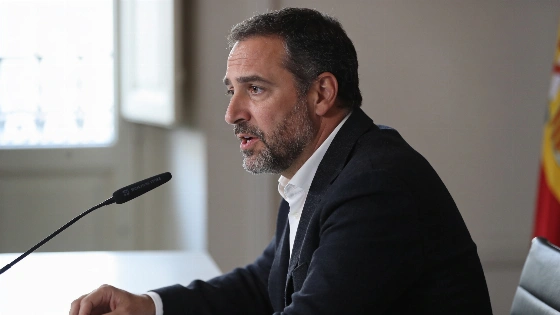
Vox opened its 15-day general-election campaign on Friday, 13 November, at Madrid’s Plaza de Colón, where more than 2,000 people gathered. The campaign is scheduled to run until the end of Friday, 27 November. Voters are due to elect members of both the Congress of Deputies and the Senate on Sunday, 29 November. Prime Minister Pedro Sánchez dissolved parliament on 5 October and called the snap election. Santiago Abascal told supporters that confidence in favourable polls posed a danger and urged mass mobilisation for the vote.
Messages came from Portugal’s André Ventura and Italy’s Matteo Salvini. Italy’s Giorgia Meloni also sent a message, as did the Netherlands’ Geert Wilders and Germany’s Alice Weidel. Hungary’s Viktor Orbán and Czech prime minister Andrej Babiš joined the line-up, along with France’s Marine Le Pen. Argentina’s Javier Milei and Brazil’s Flávio Bolsonaro also sent messages. Meloni highlighted the length of her time leading Italy’s government; Milei called for Pedro Sánchez to be removed from office. Several parties also opened their campaigns. Sánchez began in Seville, while People’s Party leader Alberto Núñez Feijóo appeared in Badalona. Ada Colau launched Frente Amplio’s campaign in Madrid.
Abascal described the election as existential for Spain and warned that the country would suffer if the government remained in power. A Sigma Dos daily tracking poll published as the campaign opened put Vox at 19.6% of the projected vote and between 63 and 70 seats in Congress. The same poll projected a combined 202 to 216 seats for the People’s Party and Vox in the 350-seat chamber. Abascal urged supporters not to treat the projections as a foregone conclusion, saying confidence in favourable polls was among the campaign’s chief dangers. He also praised what he called Spain’s praying rear guard. He said he had asked Discalced Carmelite nuns at Cerro de Los Ángeles to pray for him and the country on the day of his La revuelta interview. Earlier coverage of the dispute detailed criticism of that appearance from both sides of the political debate.
He attacked the Democratic Memory Law, calling it the most infected law passed in democracy, and accused the government of reviving hostility among Spaniards. He also questioned the framing of gender-based violence, citing the case of Covadonga, who was stabbed in Gijón by her former partner, who was of Moroccan origin. Abascal suggested that religious violence should also be discussed. Vox’s platform for the election contains 115 proposals arranged in 13 thematic blocks. Immigration and housing feature among its main policy areas, alongside tax reductions. It also proposes tighter conditions for foreigners’ entry and residence, and reserving some public assistance for Spaniards. The platform would remove a substantial portion of existing economic and environmental regulation.
Vox was the only party that did not suspend its campaign, a decision criticised by the other political forces. Abascal closed by invoking the Reconquista and the evangelisation of America, then the War of Independence, as he called for Spain’s freedom and unity to be recovered on 29 November. Vox’s stage guests wore white shirts bearing the campaign slogan “Es sentido común” in green lettering, rendered in English as “It’s common sense.” The slogan was accompanied by themes including “national priority” and deregulation, as well as “remigration.”