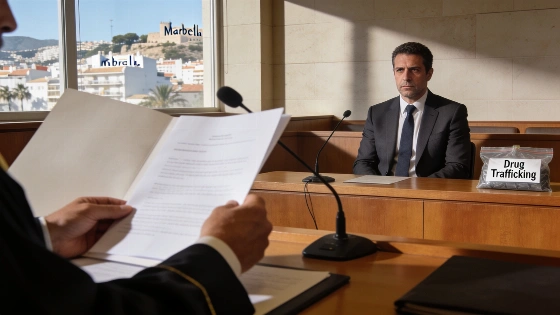
The National Court has sentenced Joakim Peter Broberg, stepson of Ángeles Muñoz, Marbella’s current mayor and a member of the Partido Popular, to nine years in prison. The court found him guilty of drug trafficking and money laundering, concluding that he had a sustained role in a criminal organization that distributed hashish and marijuana.
Broberg was deeply embedded in the group’s operations, the court found, rather than a peripheral figure. The verdict described his involvement as “permanent and stable.” The case has drawn attention for the crimes and Broberg’s family ties to local political leadership.
A related ruling in the broader Swedish-linked Marbella investigation led to a separate outcome for another defendant. On 30 June 2026, the criminal chamber of Spain’s Audiencia Nacional acquitted Nils Anders Fisher of all charges, including money laundering, information from an EFE report published on 22 October. Fisher had been described in the proceedings as an alleged front man for Broberg. His acquittal is separate from Broberg’s nine-year sentence. The investigation, described as involving alleged drug trafficking, included multiple defendants and produced different legal outcomes.
The investigation also implicated Broberg’s father, Lars Gunnar Sune Broberg, who was married to Ángeles Muñoz. He faced prosecution for allegedly laundering 6.3 million euros. Proceedings against him were discontinued because his health was deteriorating, and he died before the trial could take place.
The high-profile Marbella case comes as Spanish courts face scrutiny over their handling of corruption and organized crime, particularly when public figures or their relatives are involved. Politics and criminal investigations have intersected repeatedly in recent years. Debate over judicial leniency and cooperation agreements flared again after the Supreme Court suspended Víctor de Aldama’s sentence in a major corruption case, as detailed in this report on a controversial ruling involving the ‘caso Koldo’ scandal.
Marbella, known for luxury tourism and real estate, has periodically faced challenges involving organized crime and money laundering. Connections between people under investigation and local government complicate law enforcement efforts and shape public perception. The court’s decision in Broberg’s case highlights the consequences of participating in criminal networks and the need for vigilance and transparency in political and judicial spheres. The outcome may influence future proceedings involving public figures and their families, reinforcing the importance of impartiality and due process in Spain’s legal system.