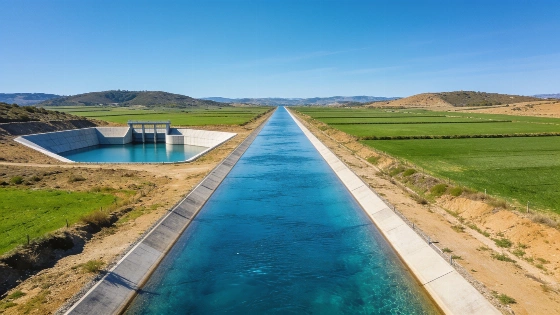
The extension is intended to secure water supplies for 80% of Navarra's population. It would also expand irrigation capacity and support the agricultural and livestock sectors, along with agro-industry in the south. The Canal de Navarra is designed to carry water south from the Itoiz reservoir on the Irati river towards the Ribera, ending at Laguna de Lor in Ablitas.
President María Chivite Navascués signed the second agreement on Tuesday, 17 November, after the regional government approved its text. It covers the construction and financing of the second phase. The text is to go to the Ministry for the Ecological Transition and the Demographic Challenge for signature by its third vice-president, Sara Aagesen. That same day, Spain’s Council of Ministers authorized the state and Navarra to sign the financing agreement, a step required before both administrations could sign it.
Territorial Cohesion Councillor Óscar Chivite outlined the agreement at a press conference. He called it the final administrative step towards bringing water from Itoiz to the Ribera. The agreement moves the project towards tendering, but construction of the second phase has not yet been awarded or carried out.
The planned route runs about 70 kilometres from the existing canal at Pitillas to Ablitas. Its initial flow rate is 20 cubic metres per second at origin. A branch will serve the Alhama river area and end between Cintruénigo and Corella. The project also includes eleven irrigation outlets and two regulating reservoirs.
The second phase is budgeted at €354.4 million. That figure includes project design and construction, land costs, replacement of affected services and works supervision. The overall Canal de Navarra project is estimated at about €850 million, with €495.5 million attributed to work already completed. The second phase will complete the southern connection, extending the existing system towards the Ribera.
The financing model follows earlier agreements: public administrations provide half of the total through their shareholdings in CANASA, while bank loans cover the other half and are repaid through water-user tariffs. Of the approximately €177 million public share of the second phase, the State contributes 60% and Navarra 40%, in line with their respective stakes in CANASA. In 2026, the State is to contribute €38 million and Navarra €25.3 million through a capital increase, for a combined €63.3 million. The remaining approximately €177 million is to come from bank borrowing, with repayments recovered through tariffs paid by water users. At the time of the agreement, €38 million remained to be paid by the Spanish government and €25 million by Navarra. This regional infrastructure funding is separate from Spain's €45 million climate-adaptation pledge at COP31, covered in earlier reporting.
The agreement also commits the regional government to seek changes to the terms of an advance linked to anticipated water use. Repayment of the €77 million advanced by Navarra is extended to 2055. The proposed changes would defer repayment to between 2055 and 2068 and lower the interest rate. The parties also commit to respect the transfer of hydroelectric rights linked to the Itoiz system. Navarra is to promote extending the relevant concessions until 2068 or until the Canal-related investments have been fully amortised.