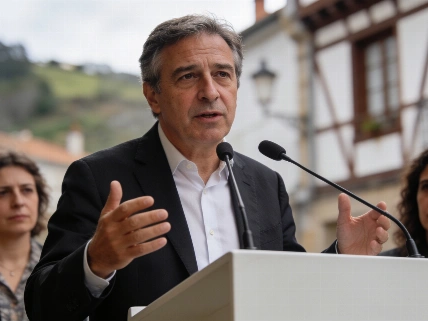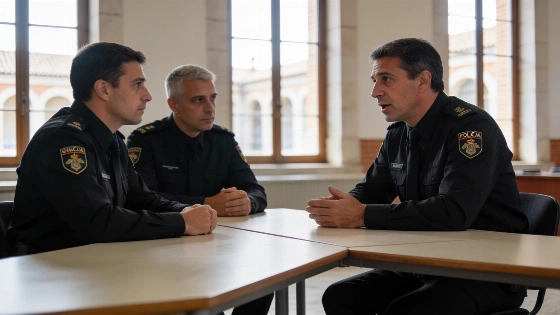
Fifteen working groups are tackling issues from digital interoperability and road safety to gender-based violence and cooperation between canine units. Participants are sharing progress and local coordination experiences at the first convention of local police and Guardia Civil chiefs, held at the Guardia Civil Officers’ Academy in Aranjuez on 17 and 18 November.
Mercedes González, Director General of the Guardia Civil, opened the meeting. More than 200 local police members from across Spain are attending, alongside representatives of the FEMP and UNIJEPOL, as well as Guardia Civil personnel.
The gathering implements a cooperation plan approved in July 2025. Its purpose is to strengthen lasting links between the Guardia Civil and local forces, which are central to public safety in their municipalities. The working groups cover training and digital transformation, as well as interoperability and gender-based violence. Their other areas include environmental protection, violent radicalisation, unmanned aircraft and road safety.
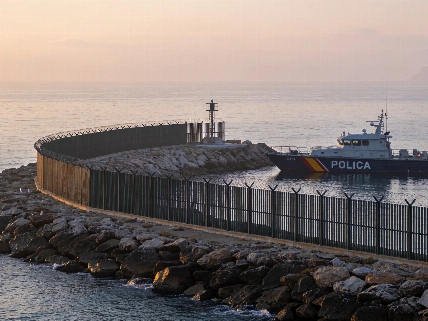
The scale of the local policing network helps explain the plan’s reach. Spain has around 2,000 local, municipal or urban police forces. More than 1,500 operate in municipalities within Guardia Civil areas of responsibility, according to figures cited by González. She said the country’s decentralised model brings policing close to residents, while requiring coordination between forces. The Guardia Civil also describes inter-agency coordination as an operational priority in maritime and port protection, working with State Ports, the Merchant Marine and customs administrations.
The meeting is aligned with the Guardia Civil Institutional Strategy 2030 and its 2025–2028 Strategic Plan, both of which include building alliances with key security partners. Separate reporting has examined a reported staffing shortfall in the Guardia Civil in Huelva.
The FEMP secretary general said local police and the Guardia Civil have different structures and functions, making coordination necessary. Cooperation, the secretary general stressed, should help each institution carry out its own responsibilities rather than replace them.