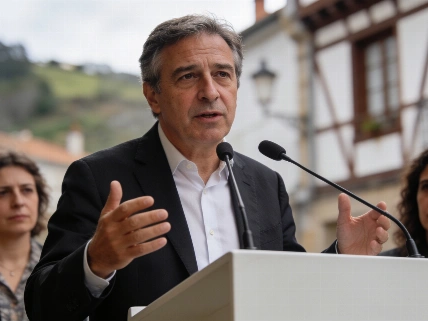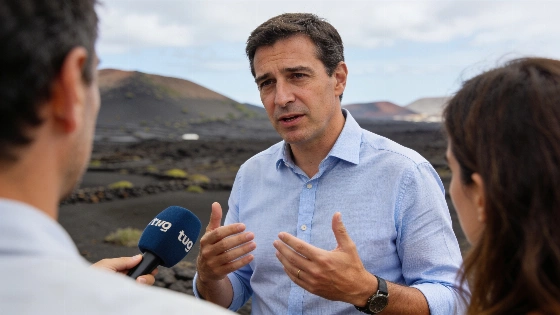
Austria, Germany, Denmark, Greece and the Netherlands announced negotiations with Rwanda on 16 November 2026, following discussions at the Vienna Migration Conference. The talks aim to establish a deportation centre for people subject to enforceable return decisions. The governments described the project as a pilot, with first transfers targeted for 2027. Rwanda said the parties were jointly exploring the possibility of a return hub through an equal and mutually beneficial partnership. Vox leader Santiago Abascal has now voiced support for the proposal.
Abascal said centres for people who enter countries illegally were a step in the right direction. He argued that Spain should establish them if Morocco or Mauritania refused to receive migrants, and called for action against smuggling networks. The stance echoes his earlier campaigning in the islands, where he described arrivals as a planned invasion, as reported in an earlier account.
The EU Return Regulation provides the legal basis for the five-country initiative. Approved by the European Parliament in June and adopted by the EU the following month, it allows the creation of migrant return centres in third countries for the first time. Its stated aim is to speed up deportations. Spain opposed the regulation from its conception. It requires non-EU citizens without permission to leave the bloc immediately or within a specified period, while respecting fundamental rights and international law. The Dutch government says the framework allows people without a right to remain in the Union to be transferred to a third country under an agreement or arrangement, but excludes unaccompanied minors. It describes the proposed centre as open and temporary. The EU Agency for Fundamental Rights has stressed that participating states remain bound by their human-rights obligations and accountable for violations linked to cooperation with third countries.
Abascal’s remarks express Vox’s support for the approach; they do not amount to a policy adopted by Spain. The five governments negotiating with Rwanda are Austria, Denmark, Germany, Greece and the Netherlands. The party’s programme calls for an end to mass regularisations and a halt to new arrivals. It also proposes tougher requirements for Spanish nationality. Vox wants deportations for immigrants convicted of serious crimes or who make a way of life from minor offences. For people in an irregular situation, it calls for repatriation and proposes remigration for foreigners who do not contribute or rely on public subsidies.
Infolibre reported that Abascal’s wife, Lidia Bedman, receives the bono social térmico, an aid scheme for vulnerable households. Asked about it, Abascal said his household would not give up assistance for large families and argued that public money should go to families. His response did not directly confirm or deny the report about Bedman’s benefit.
Abascal also rejected the idea that the PP’s migration position represented a move by Vox towards the party. Instead, he argued that the PP was coming closer to Vox. On the proposed Basque descendants law, which would give descendants of people forced to leave the Basque Country because of ETA terrorism the right to vote there, he said Vox had put forward the idea earlier and expected agreement with the PP.
He urged PP leader Alberto Núñez Feijóo to clarify whether the party would seek far-reaching change with Vox or make agreements with what remains of the PSOE. Abascal cited cooperation between the PP and PSOE in Europe and blamed their migration policies for conditions in the Canary Islands.
The Rwanda proposal has drawn criticism from human-rights organizations. Human Rights Watch said the arrangement could affect people, including families with children, who cannot be transferred directly to their countries of origin. It called for agreements only with countries that respect international human-rights law. Amnesty International also condemned the plan, citing concerns about Rwanda’s treatment of political opponents, as well as journalists and human-rights defenders. UN High Commissioner for Human Rights Volker Türk expressed concern about the scheme on 17 November. The EU Fundamental Rights Agency has emphasized that countries remain accountable for rights violations after a transfer.