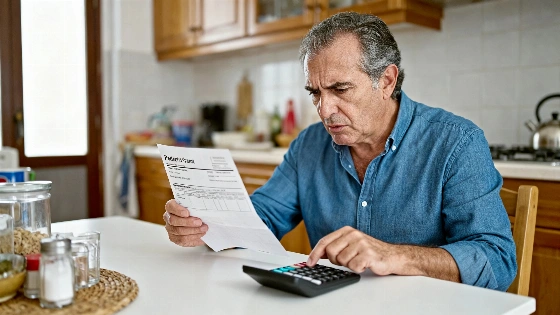
Pension Increase in Spain: Why Most Won't Feel the Raise. In 2026, pensions in Spain will rise again by 2.7%, but not everyone will notice the difference. Due to the specifics of taxation, part of the increase will be withheld by the state, so the real payouts will be lower than announced.
In 2026, Spanish pensioners will officially receive another pension indexation—this time by 2.7%. However, for many, this news may not be as positive as it seems at first glance: a significant portion of the increase will go toward paying income tax, and the final amount in hand will be noticeably less than expected.
The reason is simple: pensions in Spain are subject to IRPF—income tax, which is calculated on a progressive scale. This means that the higher the income, the greater the percentage withheld. When a pension increases, the tax amount also rises, and if a pensioner's total income crosses the next tax threshold, part of the increase may be taxed at a higher rate.
How the system works
Pension indexation in Spain is linked to inflation: the government promises to maintain the purchasing power of elderly citizens. But all calculations are made in gross figures—that is, before taxes are deducted. In practice, this means that, for example, with a 40-euro monthly pension increase, only 25–28 euros may remain after IRPF is withheld. For those whose payments are already close to the new tax threshold, the difference may be even more noticeable.
Who won’t get the full increase
The effect will be especially noticeable for pensioners with relatively high payments or for those who receive additional income. If the total annual income after indexation exceeds a certain limit, part of the pension will be taxed at a higher rate. As a result, two pensioners receiving the same percentage increase may end up with different amounts in hand — it all depends on their tax situation.
What pensioners should do
The indexation process is automatic: there is no need to submit any applications, and the new amounts will be paid out starting in January. However, it is important to keep a close eye on your tax deductions and, if necessary, consult with an accountant or the tax authorities. For some families, even a small increase in the pension may affect the size of other social benefits or tax allowances.
Context and outlook
As Talent24h notes, pension indexation remains an important social guarantee, but real income growth for pensioners is held back by the tax system. In recent years, the Spanish authorities have emphasized that maintaining retirees’ purchasing power is a priority, but the IRPF mechanism inevitably 'eats up' part of the increase. For many families, this means they should not count on receiving the full indexation amount.