Spain’s economy has surged since 2013, but the benefits have bypassed much of the population. Despite record employment and rising profits, stagnant wages and persistent poverty reveal a widening gap between headline growth and everyday reality.
Spain’s GDP keeps climbing. Stock market records keep falling. But for millions, daily life feels stuck. Wages barely move. Jobs are shaky. Rent and mortgages eat up half a paycheck. For many, the boom is just numbers on a screen.
Pedro Sánchez’s government calls itself the most progressive in Spain’s history. Since 2018, the economy has grown more than 11%. That’s faster than most of Europe. But the gap between companies and households has only grown. Business profits are up 15% in real terms. Household incomes? Almost flat. The government has refused to adjust income tax brackets for inflation. That means families pay more tax, even as their money buys less. The OECD’s September 2026 report projects Spain’s GDP will rise by 2.6% in 2026 and 1.8% in 2027. But inflation is set to stay high—3.7% and 3.4%—so real incomes will keep shrinking.
In the second quarter of 2026, Spain’s average free-market housing price reached 2,355 €/m², up 12.5% year-on-year.
Jobs are up, but the story is messy. Three million more people work now than eight years ago. Yet unemployment has dropped by less than a million. Youth unemployment is stuck at 25%. Labor reforms have not ended insecurity. They just changed its shape. Temporary contracts are down, but part-time and stop-start jobs have taken their place. Cáritas says 18% of workers are now “working poor.” Official data from September 2026 shows that in August alone, 1,144,827 contracts were signed. Of those, 704,553 were temporary. The average contract lasted just 37.85 days, according to the National Statistics Institute.
In 2026, Spain set a record: over nine million contracts signed. But 59% were still temporary. Nearly half were part-time or fixed-discontinuous. The average hours worked per employee have dropped since 2018. More people have jobs, but fewer hours are worked overall. This is Spain’s new labor reality. BBVA Research reports GDP grew 0.7% quarter-on-quarter and 2.6% year-on-year in the second quarter of 2026. Domestic demand drove this growth. But most jobs remain unstable and low quality.
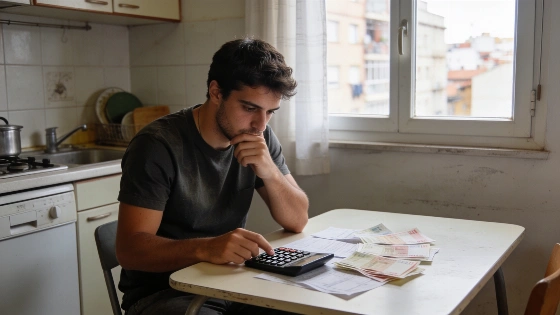
Housing costs have exploded. The average rent or mortgage now takes up 50% of a typical salary. Fedea says hidden poverty among workers has risen by four points. Since Sánchez took office, average home prices have jumped 40%. Family financial wealth now stands at 155% of GDP—almost double what it was. Inequality is getting worse. Market data shows the average monthly rent is about 1,204 €. The average mortgage payment is 825 €. No wonder housing eats up so much income.
In July 2026, 61,417 home sales were registered in Spain, and in June, the volume of housing mortgages reached €8.19 billion, with prices continuing to rise at double-digit rates. This confirms that the housing crisis is neither local nor short-term.
The gap between generations is growing. Pensioners have seen their incomes rise, thanks to automatic increases. Young workers under 25? Their real wages are flat, even with a higher minimum wage. The difference is clear in who can afford a home or save for the future.
Poverty rates barely move. The Arope index, which tracks risk of poverty and social exclusion, has dipped only slightly. Child poverty is up. The Ingreso Mínimo Vital, once hailed as a breakthrough, has not made a dent. Public services show little progress. Hospital waits are long. Schools are stuck. Roads, trains, and water systems need work. Disaster prevention—fires, floods—still lacks money and laws.
For many, nothing has changed since 2018. The National Statistics Institute’s Survey of Living Conditions says 36% of families still can’t handle an unexpected bill. 34% can’t afford a week’s holiday. These numbers are almost the same as eight years ago. Progress? Hard to see.
One real change came late in the current legislature. Spain finally approved reforms to its dependency and disability laws. The government calls it a “refoundation” of the care system. The plan promises more services, less red tape, and €6.2 billion in extra funding over two years. The goal: end waiting lists for five million people and their families.
Big shifts are happening, as the Bank of Spain notes. Since 2013, immigration and job creation have fueled growth. Productivity is up, especially in professional services, commerce, and digital work. The current account surplus is strong, thanks to tourism and, for the first time, non-tourism services. Household and company debt hit record lows in early 2026.
But the main problem remains. Growth has not brought broad well-being. Government crisis measures, missed tax reforms, a lack of new housing, and flawed social policies have mostly helped the wealthy, business owners, and pensioners. For most people, the gains of the last eight years are hard to find.
As reported earlier, even big cultural moments that grab headlines can distract from the deeper economic struggles facing Spanish families.
Spain’s economic run since 2013 looks great on paper. But without real redistribution, most people are still waiting for their share. Until the government tackles the roots of inequality—tax reform, affordable housing, real social support—growth will keep dividing winners from losers. Shared progress remains out of reach.