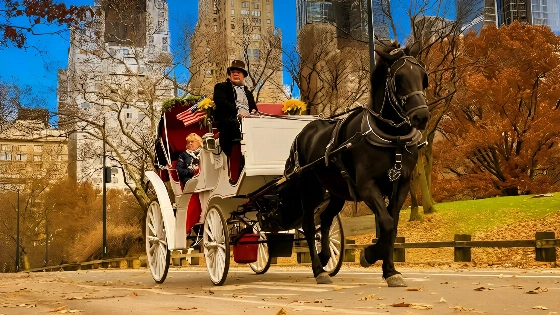
New York’s City Council approved the measure in October by 40 votes to seven, with two abstentions. Mayor Zohran Mamdani signed Romanch’s Law on 19 November 2026, setting 1 June 2028 as the deadline for horse-drawn carriages to stop operating on city streets across all five boroughs. Existing operating licences expire on 31 May 2028, and the city will issue no new licences during the phase-out. Mamdani said the law would phase horse carriages out of New York by that deadline.
The law takes its name from Romanch Mahajan, an 18-year-old Indian tourist who died in June 2026 after falling from a carriage in Central Park. NBC New York reported that the horse became startled after the driver stepped away to take a family photograph, throwing Mahajan from the carriage. His death renewed attention to the safety of carriage rides in the city.
Concerns about animal welfare had already been raised over horses working amid traffic and noise. Critics have also pointed to hard road surfaces and other urban conditions. Reports of horses collapsing in the street have fuelled public anger. The carriage tradition in Central Park dates to 1858, making it a tourist attraction for more than a century and a half.
The change carries a practical cost for workers: estimates range from about 170 drivers and people who own or work at stables to roughly 200 people who depend on the trade. The municipal government has proposed financial assistance, with career-transition support, and plans to study possible alternatives such as electric carriages and electric pedal-assist bicycles. The study does not itself authorize either option. Industry representatives and licence holders say the proposed support does not adequately account for their interests.
On the day Mamdani signed the law, the Transport Workers Union of America and Transport Workers Union of Greater New York, Local 100, filed a federal class action in the Southern District of New York seeking to block it. The unions and licence holders argue that ending the trade amounts to a taking without just compensation. They also challenge the proposed buyback value for carriage licences. The lawsuit puts the city’s phase-out schedule under legal challenge.
Horse-drawn carriages remain part of the tourist offer in Seville. They are also available in Málaga and Córdoba, where rides through historic centres raise similar questions about animal welfare and tourism. Spain’s tourism offer includes other forms of motoring heritage, as in RUSSPAIN’s coverage of an Almería classic-car route.
Long working hours on hard roads amid heat and traffic noise can affect horses’ welfare. New York’s city government will assess electric carriages and electrically assisted bicycles as possible replacements. The review does not mean either option has been adopted.
PETA welcomed the decision and announced a $50,000 contribution towards the affected horses’ retirement.