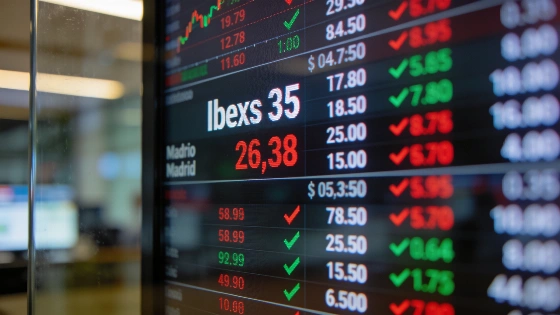
Brent has moved back above $100 as stocks retreat across Europe and the United States. Repsol is gaining, while Spanish renewable-energy shares face fresh selling.
Brent has moved back above 100 dollars. The Ibex 35 and major international markets are falling as investors weigh geopolitical risks and interest-rate expectations. Spain's main index ended lower in a broad selloff that also hit Europe and the United States. Investors are watching the conflict around Iran and waiting for the next signals from the Federal Reserve.
Repsol was one of the clearest winners in Madrid. Its shares rose as crude prices climbed. The move came after Donald Trump said the United States was considering a halt to diesel exports to control fuel costs. The effect on Spain would probably be limited because diesel imports account for around 20% of national consumption. The renewed conflict narrative has still given the energy company a lift.
Reuters reported that the global diesel market was also facing a supply squeeze, with record refining margins and rising US diesel prices adding to pressure across the energy sector.
Indra and Acerinox also finished higher. Most other Ibex 35 companies fell.
Solaria suffered the sharpest setback, dropping more than 5%. One possible reason is renewed concern that the Spanish government could restore the "excepción ibérica". The mechanism was introduced in 2022 to limit gas prices and contain electricity costs. The fall also followed RBC's cut to Grenergy's target price. That move appears to have spread weakness across other renewable-energy shares. Short sellers may have made the decline worse because of their high weight in the company's capital. ACS and Telefónica also posted significant losses.
The selling has spread beyond Madrid. The DAX and CAC 40 also fell as investors focused on possible meetings at the United Nations summit. The Nasdaq 100 and S&P 500 weakened as Trump's threats toward Iran and his hard-line tone suggested that the conflict could last longer.
Data from Spain’s energy statistics system CORES indicated that the share of imported diesel in national consumption was below 20% in some periods of 2026. That points to a limited risk of a direct diesel shortage in Spain, even though international prices can still affect households and businesses.
The same prospect is putting pressure on government bonds. The yield on the US 10-year bond moved above 5%. The 30-year yield reached 5.38%. Higher yields make life harder for heavily indebted companies and point to tougher financing conditions in the coming quarters. Reuters linked the rise in Treasury yields to expectations of a more hawkish Federal Reserve and signs that the US economy remained strong.
US PMI data added to the pressure. The figures beat expectations. Markets saw them as evidence that the Federal Reserve has more room to raise rates because the economy remains strong. Fed decisions and statements have become central to the market's view of borrowing costs and risk valuations. Market pricing for an October rate increase rose from 55% yesterday to 71% today.
Energy costs are also putting more pressure on household budgets. An earlier energy report described how fuel and power bills were already squeezing Spanish farmers, hauliers, industry and self-employed workers.
Oil is setting the tone across several markets. Brent above 100 dollars is pushing up global inflation expectations. Gold and silver are falling as the prospect of higher rates grows. The dollar has gained support from the rise in crude prices.
The market's message is clear. Energy companies can benefit if the conflict lasts, while indebted businesses and renewable shares face higher yields and shifting policy expectations. For Spanish investors, this was more than a broad fall in stocks. The session showed how quickly oil, US monetary policy and fears over electricity prices can pull different parts of the Ibex 35 in opposite directions.