The University Sancti Spiritus in Oñati has emerged from years of decay. Restoration has revived its Renaissance facade and replaced the iconic fallen warrior statue. The building now stands ready for a new era.
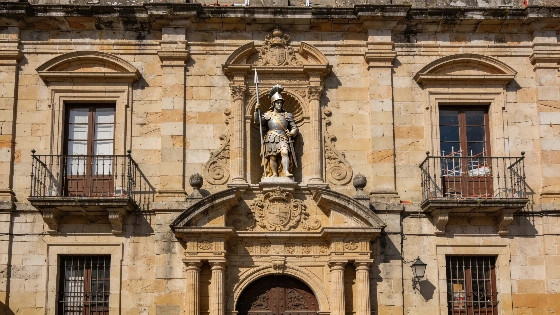
A year after lightning destroyed the stone warrior atop the University Sancti Spiritus in Oñati, the Basque Country’s oldest university has returned to view with its Renaissance character restored. The collapse of the centuries-old statue forced a rapid response, coming just as the building neared its 500th anniversary and its structural problems could no longer be ignored.
Restorers faced more than just rebuilding the “soldier of faith, truth and revelation.” They had to repair decades of erosion, water damage, and pollution that had left the facade scarred. The exterior, left bare for a century, has now been re-plastered with lime mortar to match its 16th-century look. Architect Fernando Tabuenca led this decision, aiming for historical accuracy and sharper detail. Diario Vasco reports that the work was part of a two-phase plan, guided by a "plan director" and a budget of over €3 million.
The restoration project included the removal of scaffolding and the return of the building's facade to its original lime-plastered look, characteristic of the 16th century.
Founded in 1540 and open since 1548, the University Sancti Spiritus was the Basque Country’s only university for four centuries. Its architecture and art rival Spain’s top Renaissance institutions, like the Colegio San Ildefonso in Alcalá de Henares. A papal bull from Paul III gave it the same privileges as Salamanca, Bologna, Paris, and Valladolid, making it a major academic center in the region.
But the Basque climate and time have taken their toll. Persistent rain, river fog, and airborne manganese from a nearby battery factory sped up the decay. Earlier repairs in 1993 didn’t hold: new cracks, lichen, and moisture damage kept appearing. The latest restoration, directed by architect Verónica Quintanilla, focused on preserving the building’s dignity rather than hiding its age. Scaffolding covered the entire perimeter for months. Quintanilla described the work as palliative care for a monument nearing its fifth century, not cosmetic surgery. The team addressed not just the facade but also the causes of decay—humidity, corrosion, and worn masonry—with repairs to the roof, structure, and moisture barriers, as Diario Vasco notes.
The changes go beyond the facade. The roof is new, and interior spaces have been updated for future cultural and educational use. The central courtyard, with its two-level arcades, octagonal ceiling inspired by mudéjar design, and Gothic chapel altarpiece, remains a highlight of Basque Renaissance art. The most symbolic act was the hand-carved replacement of the fallen warrior by Galician stonemason Breogán Agulla, using sandstone from Cantabria. The new statue looks identical to most visitors, but researchers will spot subtle differences from the original.
The restoration project was supported by the Gipuzkoa provincial government and linked to the Next Generation EU fund, with the second phase focusing on accessibility, tourism, and adapting the building for new functions. The project also sparked public debate over the return to the original lime finish, dividing opinions between advocates of historical accuracy and those accustomed to the exposed stone facade.
Diario Vasco
The €3.1 million project was funded by the Gipuzkoa provincial government, which also spent €239,000 on technical studies, including a full 3D scan of the building. Local officials say the goal is to keep the university as a public space for future generations, not just a relic. This approach follows a wider movement in Spain to adapt historic sites for civic use. Recent political debates in Valencia have also highlighted the importance of preserving regional identity, as reported earlier.
Today, the University Sancti Spiritus remains a rare example of Basque Renaissance civil architecture, with its row of stone warriors restored. The project is not just a facelift but an investment in cultural continuity and public use. By focusing on authenticity, the restoration offers a model for heritage preservation in Spain. The university is ready to serve the community again, not just as a monument but as a living institution.