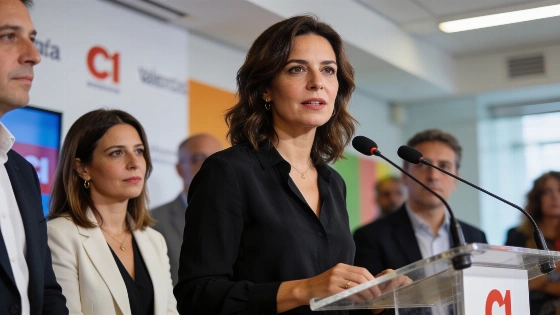
Pilar Bernabé will run for Valencia mayor as the official socialist candidate. The PSPV-PSOE has also named its picks for Alicante, Castellón, and Elche, aiming to regain control in key cities.
Pilar Bernabé is now officially the PSPV-PSOE candidate for mayor of Valencia, ending weeks of speculation. The party announced her candidacy at its Valencia headquarters, setting up a direct contest with the current city government and raising the stakes for the upcoming municipal elections.
Diana Morant, who leads the party and serves as Spain’s Minister of Science, described the election as a fight for the city’s future. She said the PSPV-PSOE is ready to govern and criticized Generalitat president Juafran Pérez Llorca, claiming he is running out of time and support. Morant questioned whether he would even seek re-election, hinting that his leadership of the PPCV could soon end.
According to Spain's National Statistics Institute, Valencia's population has grown by over 30,000 residents in the past five years, intensifying debates over housing and urban policy.
Bernabé, currently the Government Delegate in the Comunidad Valenciana and a member of the PSOE’s national leadership, is running on her experience managing crises and her visibility in the city. Her handling of the October 2024 dana, which left 17 people dead and entire neighborhoods flooded, brought her recognition from both party members and residents. She has promised that, if elected, her first steps will include official recognition for the families of those affected and immediate enforcement of Spain’s national housing law to address Valencia’s rising property prices.
Her platform includes stricter rules on tourist apartments in residential areas, introducing a tourist tax to control tourism, and a climate plan that promises every resident will see three trees from their window, 30% green space in each neighborhood, and a green area within 300 meters of every home. Bernabé has criticized the current administration’s response to heatwaves—such as putting up awnings in public squares—as inadequate, saying, "Valencia needs trees, not two awnings."
Bernabé has also said she will avoid personal attacks in her campaign, referencing a recent incident where Isabel Díaz Ayuso called Pedro Sánchez an "hijo de puta" and later claimed she said "me gusta la fruta." Bernabé says she will focus on policy and results, not insults.
The Spanish government recently allocated over €50 million for climate resilience projects in Valencia, including flood prevention and urban greening initiatives, as reported by El País. These investments are part of a broader national strategy to address the increasing frequency of extreme weather events in the region.
The PSPV-PSOE has now named its candidates for the region’s largest cities: Trini Amorós in Alicante, Rafa Simó in Castellón, and Héctor Díez in Elche join Bernabé on the ticket. Morant said the party’s readiness is a clear message to voters in cities where the socialists are not in power, positioning the PSPV-PSOE as the alternative to what it calls a "negationist" and disconnected local government.
Bernabé faces strong opponents. María José Catalá of the PP has not commented on Bernabé’s candidacy, except to urge her to keep working as Government Delegate until the end. Mònica Oltra, former vice president of the Generalitat, is working to build a broader left-wing coalition and is also expected to run. Vicente Barrera, a former bullfighter, is rumored to be Vox’s likely candidate, though this is not confirmed.
Bernabé says she will remain as Government Delegate as long as possible, arguing that the Spanish government’s investments and emergency responses—such as the UME’s recent work during the Saler wildfire—are crucial for Valencia. She points to projects like the Mediterranean rail corridor and new green infrastructure in the city’s southern districts as evidence of the central government’s role.
The PSPV-PSOE still faces skepticism in some neighborhoods. Morant rejects claims that residents are turning away from the party, saying that in difficult times, voters know where to find progressive values. The party is trying to regain ground lost in previous elections and counter the idea that it is in decline.
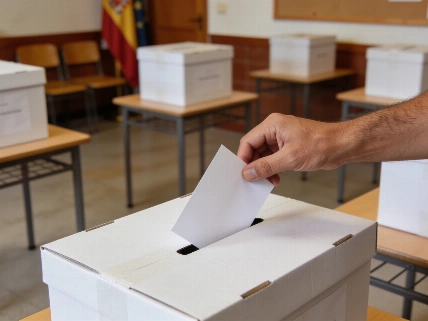
As the campaign heats up, the race for Valencia’s city hall is shaping up as a test of political credibility and practical solutions. The winner will take on a city dealing with housing shortages, climate challenges, and the aftermath of recent disasters. The result will set the direction for Valencia and could influence politics across the Comunidad Valenciana. The PSPV-PSOE’s approach is to present a candidate with a proven crisis record, focus on concrete urban reforms, and draw a clear line between its vision and the current administration’s record. Whether this will be enough to shift the balance of power will be decided at the polls, but Bernabé’s candidacy has already changed the tone of the race.