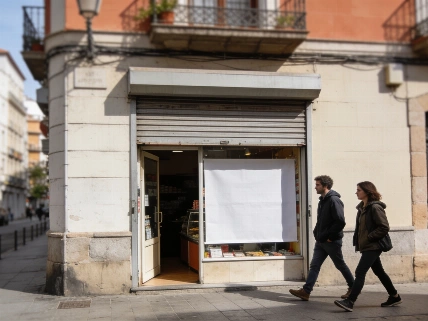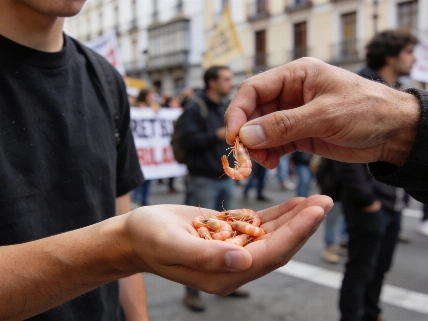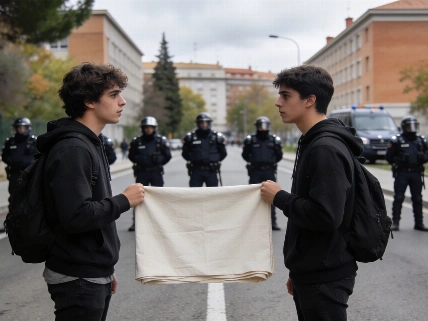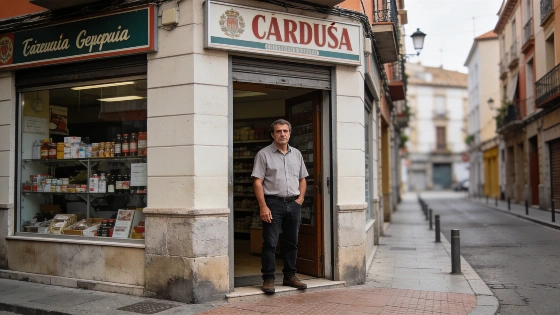
Muñoz said businesses had been burned and shops attacked for staying open. People who wanted to work, she added, were entitled to do so. The PP campaign and parliamentary group spokeswoman made the claims in an interview on Telecinco’s ‘La mirada crítica’. The 24-hour stoppage on 11 November was Spain’s first nationwide general strike in 14 years.
She accused the Government of failing to maintain public order during the protests. Muñoz argued that the strike was doomed because it did not address workers’ real problems. She said it had been called for political reasons during the pre-election campaign. The action came less than three weeks before a snap general election, called by Prime Minister Pedro Sánchez on 5 October.
Her economic criticism centred on workers who have jobs but still struggle to reach the end of the month. Muñoz described Spain as a country of working poor and said a government led by Alberto Núñez Feijóo would seek to restore the middle classes. It would also address housing and raise average wages. The strike’s organisers, the Workers’ Commissions (CCOO) and the General Union of Workers (UGT), used the slogan “Salaries. Housing. Prices.” They called for greater government intervention in housing and progress on a new minimum-wage agreement.
She also faulted the unions for remaining silent about workers’ problems for eight years, then calling a strike as elections approached. Muñoz said housing had risen from the 16th-ranked problem to the country’s leading concern without the unions speaking out. The strike was backed by tenants’ associations and regional unions, as well as sectoral unions including Basque unions ELA and LAB and Galicia’s CIG and CUT. UGT and CCOO estimated that about 4 million workers took part, around one-fifth of Spain’s workforce. A tenants’ union projected participation could reach 5 million by the end of the day. A previous report on a Madrid strike said one of 39 Metabos employees joined the 11N action.
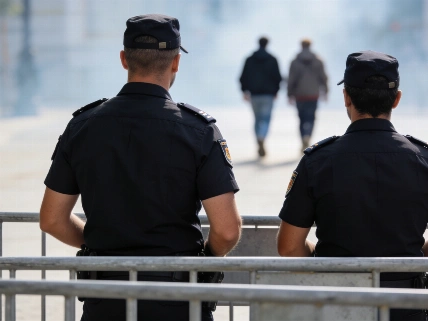
On public safety, Muñoz called for more Guardia Civil and Policía Nacional personnel and recognition of their work as a profession at risk. Referring to the killing of another officer while on duty, she said Spain needed to support its Cuerpos y Fuerzas de Seguridad del Estado to protect public order and safety. The strike was mostly peaceful during the day. Reuters reported later clashes in parts of Barcelona and Madrid, while EFE reported transport disruption and arrests.
Muñoz said a future PP government would focus on housing and immigration, with security and the recovery of the middle classes also on its agenda. She promised that so-called pull factors would end if the party took office, and advocated orderly, legal immigration that protects safety. In her account, entry into Spain should take place through an employment contract. On turnout, UGT and CCOO reported participation rates of 90% in automotive and port industries. They put participation at 85% in meat processing, 82% in waste collection and 75% in energy. Spain’s business federation CEOE described participation as low in most areas, while Madrid regional government spokesman Miguel Ángel García said 9% of public-sector employees in the region had joined.