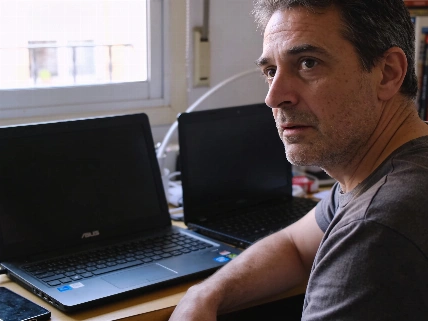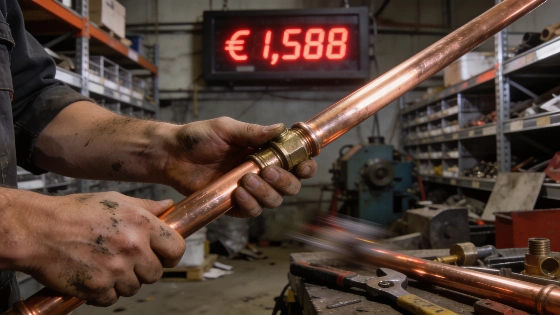
After stripping out old copper pipes from a Madrid home, Santiago, a professional plumber, loaded the discarded metal into his van and drove to a licensed scrapyard. By the end of the day, he had received €1,588 for the haul, a sum that shows how much value may remain hidden in the walls of older Spanish properties.
Information from a video shared by Fontamadrid and reported by COPE and El Blog Salmón, Santiago’s payout came from one batch of copper removed during a comprehensive plumbing overhaul, including pipes, fittings and valves. The transaction shows how a full-scale renovation can yield materials worth more than many homeowners expect.
The Process Behind the Payout
Santiago’s work began with the complete dismantling of the property’s outdated plumbing system. He carefully removed each length of copper tubing, elbow joint and valve, then sorted and packed the material for transport. At the scrapyard, staff weighed and assessed the metal before issuing payment. The €1,588 figure is no universal benchmark: copper’s scrap value depends on the quantity and grade, as well as how much solder, insulation or mixed metal it contains.
Spanish reporting by El Diario Montañés has cited indicative scrapyard prices of about €10.50 per kilogram for high-quality copper, around €9 for used or lower-grade material, and as little as €5 for copper containing large plastic or insulation. At those reference rates, €1,588 would equate arithmetically to roughly 151 kilograms, 176 kilograms or 318 kilograms, respectively. These figures illustrate how strongly grade affects valuation; they do not measure Santiago’s batch.
This sum does not represent pure profit. The time spent dismantling, sorting and transporting the material, along with any professional expenses, must also be factored in. Agreements with property owners often specify who has the rights to removed materials, so clear communication is impressive before work begins.
Why Copper Remains So Valuable
Copper retains its value because of its excellent electrical conductivity and durability, as well as its versatility across construction, energy, automotive and industrial sectors. It can be recycled repeatedly without losing its basic material properties. Yet much of the metal already in circulation remains embedded for decades in buildings, electricity grids and machinery.
A European Commission-hosted Education for Climate resource, citing the International Energy Agency, put global copper demand at about 26 million tonnes in 2023. It also reported that data centres, including facilities supporting artificial intelligence, could require 250,000 to 550,000 tonnes a year by 2030. The resource cites a 2024 University College London study estimating that recycled end-of-life copper currently meets about 23% of global demand. Recycling adds to supply, but cannot immediately recover metal still locked into long-lived infrastructure.
International prices have added to demand. On January 29, 2026, copper futures on the London Metal Exchange hit a record $14,527.50 per tonne, though prices have since fluctuated. Scrapyards do not pay the full market rate; the final offer depends on weight and grade, along with how cleanly the copper has been separated from other materials.
Legal Requirements for Selling Scrap Copper
Large copper transactions in Spain are tightly regulated. Sellers must typically provide identification, such as a DNI or NIE, and may be asked for invoices or documents establishing lawful ownership and the material’s origin. Law 7/2022 governs waste management, while Royal Decree 553/2020 sets documentation standards for professional waste transfers. Authorized waste handlers and traceability requirements help govern how waste moves through treatment and recycling.
These rules aim to keep stolen or illegally obtained metals out of the recycling stream. For legitimate renovations, the owner’s authorization and proper documentation establish the lawful origin of removed copper.
The EU also treats copper supply and recycling as part of its strategic raw-material policy. Under Regulation (EU) 2024/1252, the European Commission identified projects across the strategic-materials value chain, including the 3ECYCLE recycling project in the Netherlands, CUPIDON in Belgium, KGHM’s Integrated Recycling Smelter in Poland, and the Cobre San Rafael copper project in Spain. The Official Journal describes the structure as covering the “extraction, processing, recycling or substitution of strategic raw materials.” These projects address supply security at an industrial scale; the structure does not set a fixed price for scrap sold by an individual plumber.
The EU’s 2030 benchmarks for strategic raw materials are to meet 10% of annual needs through extraction within the bloc, 40% through processing, and 25% through recycling. Those targets help explain the policy importance of recovering metals, but local scrapyard payments still depend on material grade and market conditions.
Skilled Trades in High Demand
Santiago’s story comes as skilled trades face a shortage of workers. Randstad reports that plumbers, electricians, bricklayers and installers are among the most sought-after workers in Spain’s construction sector, which saw over 800,000 contracts signed in 2025. The €1,588 Santiago received was not a day’s wage but a one-off payment for a impressive quantity of salvaged copper, an occasional windfall rather than regular income.
For homeowners and professionals alike, the case is a reminder that old installations can hold unexpected value. Turning scrap into cash takes work and close attention to legal and practical details.