Spanish Transport Minister Óscar Puente has urged world leaders at the UN to treat road safety as a humanitarian priority. He argues that sustained investment in infrastructure is essential to reduce traffic fatalities and protect vulnerable road users.
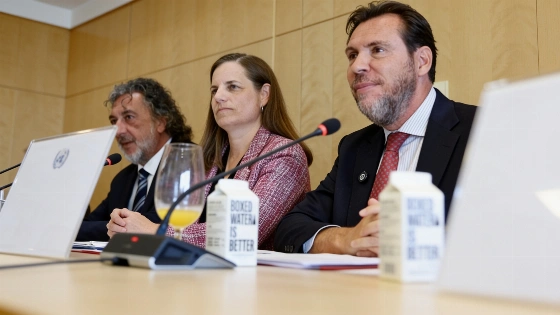
Standing before international leaders at the United Nations in New York, Óscar Puente, Spain’s Minister of Transport and Sustainable Mobility, delivered a clear message: saving lives on the road requires more than policy—it demands real, ongoing investment in public infrastructure. Addressing a high-level roundtable on road safety, Puente insisted that budgets for building, maintaining, and upgrading roads should never be seen as routine expenses, but as direct commitments to public safety and wellbeing.
Puente’s intervention came during a global summit led by Jean Todt, the UN’s Special Envoy for Road Safety. He outlined Spain’s approach to transforming its road network into an active, preventive system. Roads, he argued, must be more than stretches of concrete—they should be intelligent structures, designed to guide, warn, and significantly reduce the consequences of human error or distraction behind the wheel.
Central to this philosophy is the recognition that driver mistakes are inevitable, but their most tragic outcomes are not. With proper maintenance and modern infrastructure, fatal accidents can be prevented. The urgency is underscored by global statistics: each year, road crashes claim around 1.19 million lives and leave another 50 million people seriously injured or disabled worldwide.
Infrastructure as Protection
Puente highlighted the proven impact of well-maintained roads, updated signage, modern safety barriers, and improved layouts. These elements, he said, serve as effective shields against deadly collisions. He called for governments to maintain steady, long-term investment, warning that cutting infrastructure budgets in times of fiscal restraint risks undermining public health and safety.
One of Spain’s key strategies, Puente explained, is the transformation of state-owned roads as they pass through urban areas. The goal is to calm traffic and redesign streets to better protect the most vulnerable—pedestrians, cyclists, users of personal mobility vehicles, and motorcyclists. By redistributing road space, Spain aims to create safer, more humane environments where accessing basic services does not mean taking unnecessary risks.
Technology and Systemic Responsibility
Advanced technology also plays a growing role in Spain’s road safety strategy. Puente clarified that digital innovation and sensor systems are not substitutes for physical maintenance, but essential tools that enhance the government’s ability to predict and prevent accidents. Real-time monitoring, accident hotspot detection, and early warnings about weather or structural risks all help authorities act before tragedy strikes.
Puente’s remarks reinforced the importance of a systemic approach to road safety, where responsibility is shared among road designers, car manufacturers, public managers, and drivers themselves. In this framework, state investment is the cornerstone—enabling roads that forgive mistakes, support ecological transition, and adapt to future mobility needs without sacrificing lives.
Broader Context and Social Impact
His call to action was directed not only at Western governments but also at emerging economies, urging them not to scale back infrastructure spending even in times of budget pressure. According to Puente, Spain’s experience shows that investing in road maintenance delivers some of the highest social returns of any government action, placing public health and the prevention of human tragedy at the heart of infrastructure policy.
Spain’s focus on road safety is part of a broader movement to modernize the country’s transport sector and make it more inclusive. This push for change echoes the determination seen in other areas of Spanish mobility, such as the rise of young professionals breaking barriers in logistics—like Andrea García Cano, whose story as the country’s youngest female truck driver was recently highlighted in a feature on new faces in Spanish transport.
As Spain continues to invest in safer, smarter roads, the message from New York is clear: infrastructure is not just about concrete and asphalt, but about lives saved and futures protected. The challenge now is whether other nations will follow suit and treat road safety as the urgent, shared responsibility it is.