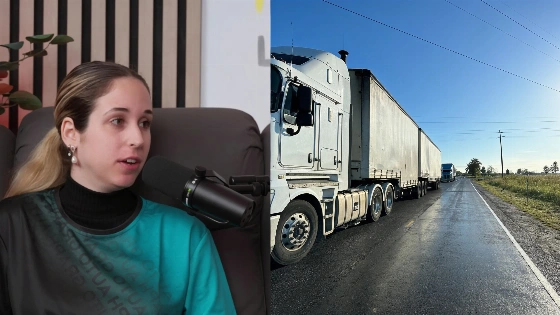
At just 22, Andrea García Cano is Spain’s youngest female heavy truck driver. Her minimalist approach, technical discipline, and determination set her apart in a male-dominated industry, inspiring a new generation of women in logistics.
Andrea García Cano keeps only three essentials in her truck’s glove compartment: hand sanitizer, fuel receipts, and a phone charging cable. At 22, she holds the distinction of being Spain’s youngest female driver of articulated lorries, a fact confirmed by industry records. Known online as Andrea Truckergirl, she manages the demands of long-haul driving with a focus on order and simplicity, while directly confronting the persistent stereotypes about gender and age in the Spanish transport sector.
Andrea’s path into trucking was shaped by personal passion rather than family tradition. Unlike many colleagues who inherit the profession, her fascination with vehicles began in childhood and grew independently. After earning her car license at 18, she quickly set her sights on heavy vehicles. Encouraged by her partner, who also works in transport, Andrea completed the rigorous training and secured both rigid and articulated truck licenses just after turning 21—a rare achievement in Spain’s logistics world.
Before taking the wheel of a trailer, Andrea gained hands-on experience as a forklift operator in a distribution center. This role deepened her understanding of the supply chain, but her ambition was always to drive. Her early days behind the wheel were marked by challenging urban routes through central Barcelona, navigating dense traffic and unpredictable drivers in a large rigid truck. Despite the initial stress, her enthusiasm for driving prevailed, and she moved through three different companies before settling into her current role.
Today, Andrea’s workday unfolds mostly during daylight hours, shuttling refrigerated trailers between terminals in Catalonia and a logistics hub in Zaragoza. She values the unique calm of the open road, where electronic music helps her stay alert and focused. Each journey begins with a meticulous visual inspection of her truck—checking lights and trailer connections—a routine she follows without exception to ensure safety.
Andrea’s presence at the helm of a massive vehicle often draws mixed reactions at loading docks and service areas. She still encounters outdated comments questioning her abilities based on gender, but she chooses to focus on the support from professionals who welcome the growing number of women in transport and are impressed by her skill and youth. Her story echoes the practical realities faced by others who live and work on the road, such as those featured in reports on van life in Spain, highlighting both the challenges and rewards of nontraditional careers.
Looking ahead, Andrea plans to pursue advanced studies in transport and logistics, aiming for management roles that offer more stable hours and a better work-life balance. Her ambition is to move from the driver’s seat to positions in traffic management and logistics offices, seeing her time on the road as the foundation for a broader career in the industry.
Spain’s logistics sector remains heavily male-dominated, with women representing a small but slowly growing share of professional drivers. Initiatives to attract more women and young people to the field are gaining traction, but stories like Andrea’s remain the exception. Her journey underscores both the progress and the challenges that define the future of transport in Spain.