Oviedo’s mayor called a violent attack on left-wing activists a minor incident and defended the attackers as 'not bad people.' His comments have sparked strong criticism from officials across Spain.
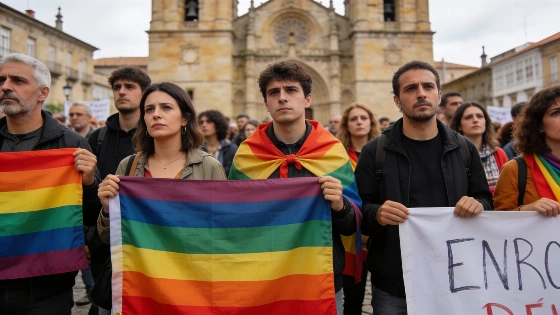
Oviedo’s mayor, Alfredo Canteli, is facing widespread criticism after he downplayed a violent assault on two left-wing activists, calling it a "mere anecdote" and refusing to condemn the attackers. Instead, Canteli described the group as "young people" who are "not bad people." His remarks came as protesters filled the city’s cathedral square to denounce the attack, drawing condemnation from across Spain’s political spectrum.
The attack happened during the San Mateo festival, after 3 a.m., near the cathedral. According to regional media, a group of eight young men tried to tear down a rainbow flag at the Association Moza d’Asturies (AMA) booth, shouted insults and far-right slogans, and then assaulted Rubén Rosón, a former Somos councillor, and Jorge Fernández, a doctor. Both men needed medical attention for punches and kicks, with one requiring stitches, as confirmed by several sources and the HUCA hospital.
National officials responded quickly. Interior Minister Fernando Grande-Marlaska called the attack a hate crime and urged that those responsible be identified and prosecuted. Health Minister Mónica García expressed support for the victims and warned that hate speech leads to real violence. Regional leaders, including Principado president Adrián Barbón and Asturias government delegate Adriana Lastra, also condemned the attack and criticized the mayor’s response.
Canteli, a member of the Partido Popular, not only played down the violence but also questioned the victims’ credibility, referencing a previous incident involving Rosón in 2021. He insisted that only one side of the story was known and declined to criticize the attackers, saying he did not believe they were "bad people." PSOE’s Montse Mínguez said these comments undermine democracy and normalize political violence. Grande-Marlaska added that if Canteli knows the attackers, he should help police identify them.
The incident and the mayor’s reaction have reignited debate over how far-right violence is handled in Spain. The attack spread quickly on social media, and the large protest turnout in Oviedo’s cathedral square showed the public’s demand for accountability. The case also echoes recent tensions in other regions, such as the recent breakdown of political consensus in Catalonia amid far-right provocations.
Regional media reports
Spain’s laws treat hate crimes with growing seriousness, and recent years have seen more cases involving political, racial, and LGTBIphobic motives. The Ministry of Interior has made quick investigation and prosecution a priority, reflecting a wider European move toward zero tolerance for ideologically motivated violence. The Oviedo case now tests whether local authorities will follow this national approach or continue to minimize extremist aggression. The mayor’s reluctance to clearly condemn the attackers raises concerns at a time when public trust in institutions depends on strong, principled leadership.