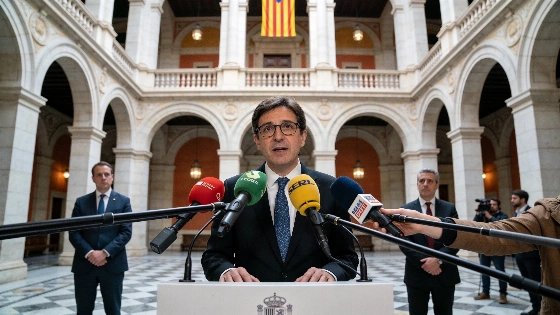
President Salvador Illa urges Catalonia to defend peaceful coexistence as far-right groups challenge the region’s traditional consensus. The Diada’s 50th anniversary highlights new political tensions and the risk of division.
On the eve of Catalonia’s national day, President Salvador Illa warned that the region’s social fabric is at risk as far-right groups become more visible and street clashes increase. In a recorded message from the Palau de la Generalitat, Illa called on Catalans to reject hatred and defend "unity within diversity," pointing to the region's history of welcoming people from many backgrounds.
This year’s Diada marks fifty years since the first major demonstration in Sant Boi de Llobregat after Franco’s death—a moment that once stood for unity and the fight for autonomy. Today, the political climate has changed. The rise of Aliança Catalana and the continued presence of Vox have brought new tension, challenging the inclusive vision that has shaped Catalonia in recent decades. The government is using the Sant Boi anniversary to highlight unity in diversity, as reported by Catalan and Spanish news outlets.
"On September 10, police detained three people and opened cases against five others after clashes erupted at the Fossar de les Moreres between far-right and antifascist groups."
—ARA English
In recent days, tensions have spilled onto the streets. At the Fossar de les Moreres in Barcelona, far-right independence activists and antifascist groups clashed, underscoring the urgency of Illa’s appeal. He stressed that Catalonia stands for peace and the founding values of the European Union, and that the region’s diversity—built by people from many backgrounds—remains its strength. According to ARA English and Crónica Global, police increased their presence to prevent direct confrontations between supporters of Aliança Catalana and left-wing antifascist groups, reflecting the scale of the Mossos d'Esquadra’s operation.
“We are and want to remain one people,” Illa said, urging citizens to reject any attempt to undermine coexistence. He called for the same unity that led Catalans to reclaim autonomy fifty years ago, reminding residents that no one is more Catalan than another, regardless of origin. His remarks come as traditional Diada events approach, including the floral tribute at Rafael Casanova’s tomb and the annual demonstration organized by Assemblea Nacional Catalana and Òmnium Cultural. Infobae and Catalan News confirm that the official Diada-11 September program remains unchanged, with a public focus on civic unity.
These developments echo concerns elsewhere in Spain about the far right’s momentum. As reported earlier, political leaders have warned that mishandling regional crises can fuel extremist narratives and erode trust in institutions.
"The presence of Sílvia Orriols and Aliança Catalana at the Fossar de les Moreres on September 10 triggered a counter-mobilization by antifascist groups, with organizations linked to CUP, Arran, Alerta Solidària, and SEPC actively participating. Local media note that the political climate is further complicated by the persistent influence of Vox and growing polarization around migration and identity issues."
—Catalan News
Catalonia’s leaders now face the immediate task of maintaining social peace in a polarized environment. The Diada’s legacy as a symbol of collective purpose is being tested by groups seeking to break that consensus. The government’s focus on inclusion and mutual respect is a response to the risk of division. As Catalonia marks this anniversary, the question is whether its institutions and citizens can resist the pull of extremism and hold onto the values that have kept the region together for the past fifty years.