A dispute over CC.OO. de Catalunya and UGT de Catalunya’s roles split the planned Barcelona protest into two marches. The split centered on the unions’ participation and their relationship with the Government.
The strike call demanded dignified work and housing under the slogan 'Viure ens costa la vida'. It was led by the Plataforma per una feina i una casa dignes, whose members included Coshac, the Sindicat de Llogateres, the Sindicat d'Habitatge Socialista de Catalunya, the PAH, CGT, Solidaritat Obrera, IAC, CNT, Sindicato de Comisiones de Base, COS and the Intersindical. CC.OO. de Catalunya and UGT de Catalunya also called for the stoppage. The 24-hour general strike, held across Spain on 11 November, focused on housing affordability, wages and working conditions. Reuters described it as the country’s first general strike in 14 years. The campaign linked housing costs and evictions with wages and household insecurity, under the broader slogan “Salaries. Housing. Prices.”
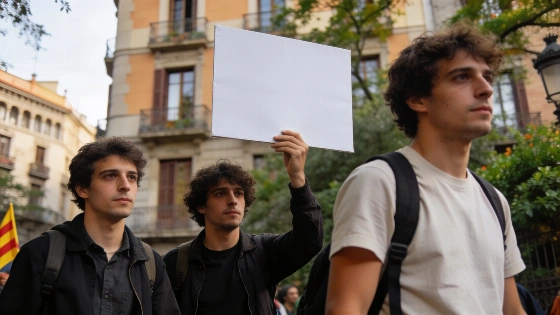
The larger march was set to start at 17:30 at the Jardinets de Gràcia. The Platform and the Sindicat de Llogateres joined the Taula Sindical de Catalunya in calling it, with support from CC.OO. de Catalunya and UGT de Catalunya. The Sindicat d'Habitatge Socialista de Catalunya and Solidaridad Obrera planned a separate march for 17:00 from plaza Jacint Verdaguer. A Barcelona demonstration took place that evening. Local police estimated 55,000 participants, while organizers put attendance at around 400,000. Participants included housing organizations and unions, among them UGT, CCOO, CGT, Intersyndical, IAC and COS, and called for stronger housing-market regulation and an end to speculation.
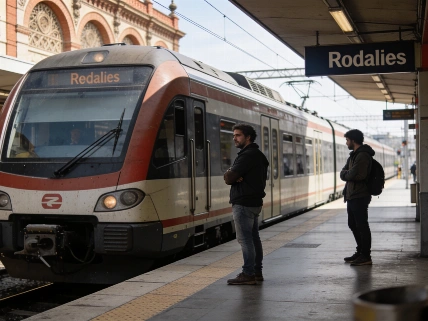
The Govern said it understood the strike, while Yolanda Díaz, Spain’s second deputy prime minister and Minister of Labour and Social Economy, publicly backed it and urged workers to join. The Government of Catalonia had published minimum-service arrangements on 9 November to maintain specified essential services during the stoppage. Catalan News reported that Barcelona’s Rodalies, FGC, metro and bus services stopped completely from 9:30 to 16:30 and then resumed at 25% capacity. A separate account of the 11N stoppage in Madrid reported that one of 39 employees at Salamanca firm Metabos joined, in this workplace report.
Unions estimated national participation at approximately 4 million workers, or about one-fifth of Spain’s workforce. EFE reported union estimates of more than 80% participation in Catalonia and Andalusia, while the CEOE, Spain’s main business organization, characterized participation as low in most sectors. The competing estimates accompanied reported disruption to transport and workplaces across Catalonia, including industrial sites and companies such as Seat, Ebro, Ficosa, Grífols and Mercabarna.