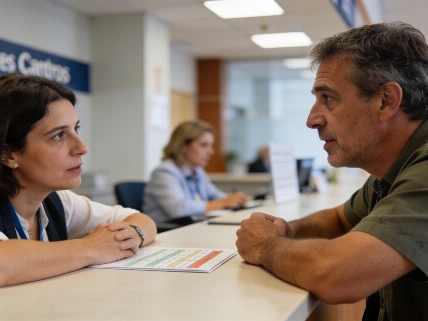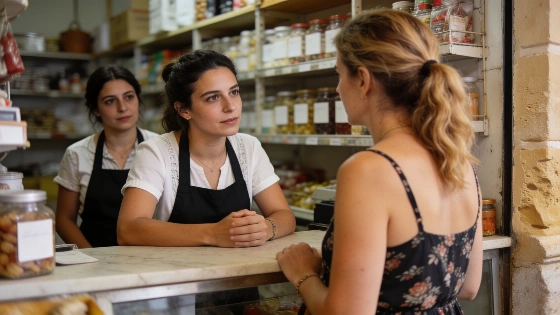
At about noon on 31 October 2026, a customer asked a worker at a KKVI bazaar on Gabriel Alzamora Street in Palma for help finding some items. According to the account she gave to dBalears, the worker asked her to speak Spanish. The customer said the employee repeated the request: “Háblame en castellano” and “Que me hables en castellano.”
The customer, who speaks Catalan, says she refused to switch languages. When the request was repeated, she asked the worker how long she had lived in Mallorca and challenged her understanding of Catalan. The exchange escalated at the till.
According to the account, the worker used her earpiece to call a Catalan-speaking colleague, saying a customer spoke “Mallorcan” and that she could speak it too. The customer then objected to being asked to use Spanish. She said the type of shop was irrelevant and that she would continue speaking Catalan if staff understood her. These remarks are translated from Spanish.
A colleague and another customer also confronted her, she told dBalears. She said they told her she had to speak Spanish. The customer replied, “I’m in Mallorca and I’ll speak Mallorcan” (translated from Spanish).
Even after a Catalan-speaking worker was called, the customer says the first employee asked that she not be served because she wanted to speak Mallorcan. The customer said she had only asked whether the worker had been in Mallorca long enough to understand her. She says nobody in the shop ultimately served her, and she left without making the purchases she had planned.
The customer made her account public through dBalears. The report says there is no indication that she filed a formal complaint, leaving the account as a public allegation rather than a formal finding.
Catalan and Spanish are both official languages in the Balearic Islands, and Catalan is recognized as the islands’ own language. The regional framework includes the Statute of Autonomy and the Language Normalisation Law 3/1986. RacoCatalà’s account of the law says Article 2.4 states that no person may be discriminated against because of the official language they use.
The report placed the incident alongside language campaigns by the Obra Cultural Balear (OCB) and Plataforma per la Llengua. Both organisations have encouraged people to continue speaking Catalan in shops and other establishments. In October 2026, Plataforma per la Llengua’s second ImpliCAT meeting in Mallorca focused on linguistic rights in commerce and the normalization of Catalan in shops. The article says Plataforma per la Llengua called on institutions at recent events to legislate consumer rules that reflect Catalan’s official status in Mallorca.
The report also says the Trobada de Municipis de Mallorca Actius pel Català (Meeting of Mallorca Municipalities Active for Catalan) criticised the language’s “marginal presence” in island businesses at an event on 28 October. It says the gathering praised dBalears for publicising complaints and encouraging the administration to open proceedings on its own initiative. Plataforma per la Llengua collects such public complaints under the label “linguistic aggressions”.