

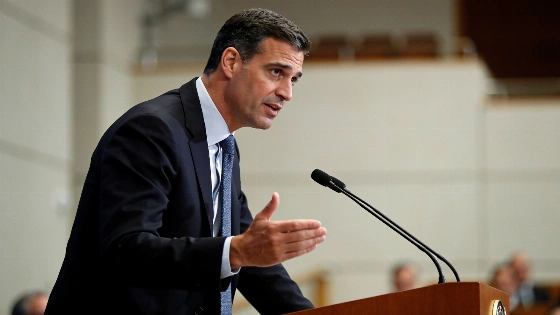
Pedro Sánchez opened Spain's UN High-Level Week with a warning against shrinking global cooperation. In New York, he defended broader institutions and the rules-based order.
Pedro Sánchez opened Spain's participation in the United Nations High-Level Week with a direct challenge to the idea of smaller international blocs. Speaking in New York at the Partners for Multilateralism (P4M) event on 21 September 2026, he said a fragmented world cannot be answered with more fragmentation. His message was simple: peace depends on widening trust, not narrowing it.
On 21 September 2026, Pedro Sánchez’s official agenda included both participation in the Partners for Multilateralism summit at UN headquarters and a separate meeting with UN Secretary-General António Guterres.
That is the approach the Spanish prime minister rejected. Limited coalitions, he argued, should not mean less room for international cooperation. The choice presented in New York was between institutions that widen participation and arrangements that leave urgent problems to a smaller group of countries.
The P4M event was organised by the European Union, Canada and Kenya. It opened Sánchez's programme during United Nations High-Level Week and gave Spain a platform to explain its view of the international system. The European Council called the summit a new coalition initiative ahead of the 81st session of the UN General Assembly. It was not described as a one-off political appearance.
The P4M initiative goes beyond a general defence of multilateralism. Its stated aims include reforming the UN and global governance while improving coordination on artificial intelligence, climate and health, with international institutions intended to become more representative, legitimate and effective.
Inclusion is not a side issue in this argument. It is how Spain says international legitimacy should be built: through institutions that widen representation instead of tighter circles of trust. The same approach connects peace with diplomacy and development with a fairer financial system.
Spain's agenda in New York also goes beyond the P4M message. The Spanish foreign-policy programme, reported with reference to the Ministry of Foreign Affairs, puts international law, the wars in Ukraine and the Middle East, and reform of the UN system through the UN80 process on the agenda. Sánchez's call for broader cooperation is part of a wider debate about how international rules and institutions should work.
No new measures or agreements were announced in the material presented. What emerged was a clear political position from the Spanish government at the start of its UN engagement: pressure on the rules-based order should be met with wider cooperation, not with its dismantling. The initiative has also drawn support from a wider political circle. Brazil has appeared in international reporting and in a joint Financial Times opinion article linked to the project.
Sánchez's intervention gives Spain a clear line at the international forum. It brings opposition to war, support for diplomacy, sustainable development and institutional inclusion into one multilateral agenda. The message is specific. Spain is defending multilateralism as a system that must stay universal, legitimate and open to those long excluded. As the debate turns toward fragmentation, the position presented in New York calls for a wider circle rather than a closed one.



