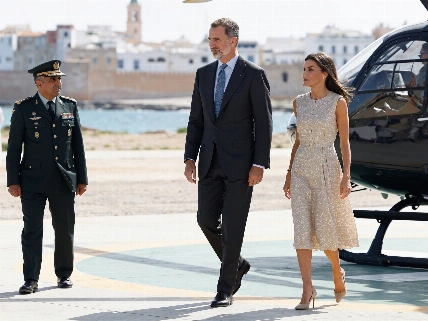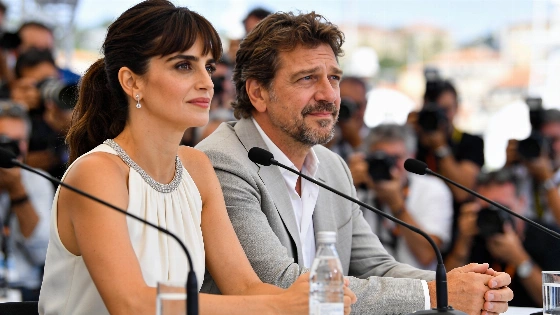
Penélope Cruz and Javier Bardem present Búnker in Venice. The film explores social isolation and the pressures of modern life. Their on-screen partnership and the script’s relevance draw attention to Spanish cinema’s global reach.
Penélope Cruz and Javier Bardem drew a full house at the Venice Film Festival, appearing together for the premiere of Búnker. The film puts them at the center of a story about privilege, paranoia, and the ways modern life can quietly separate people. Reporters pressed them on the film’s blunt look at anxiety and the personal cost of success in a world that never really disconnects.
Directed by Florian Zeller, Búnker follows a Spanish architect in London, played by Bardem, who is hired to design a luxury bunker for a tech billionaire. The job’s ethical and personal fallout strains his relationship with his partner, played by Cruz, an editor trying to find her footing in the British workplace. The script digs into the psychological toll of wealth and the subtle ways social detachment can hurt. Reuters noted that the film’s premise is rooted in real fears among the global elite about disaster, and it explores isolation, power, and a world increasingly shaped by a small group of the wealthy.
At its Venice premiere on September 8, 2026, Búnker received a 16-minute standing ovation, as reported by both Reuters and Deadline.
What makes Búnker stand out is the real-life connection between Cruz and Bardem. Zeller wrote the script with them in mind, hoping to capture the tension and closeness that only a couple with shared history can bring. He kept a careful distance, letting them draw on their own experiences for the film’s most exposed moments without crossing personal lines. This is the first time Cruz and Bardem play a married couple on screen, a detail confirmed by several industry sources.
One early scene sets the tone: Bardem’s character, confident and smiling, faces Cruz’s quiet sadness. The moment sums up the film’s look at love under pressure. Cruz said the process felt natural, especially with Zeller’s steady hand. She stressed how much trust matters on set, especially when scenes blur the line between acting and real emotion.
The film’s mix of languages—Spanish at home, English with neighbors and colleagues—reflects a shift in the industry. Cruz pointed out that ten years ago, this kind of linguistic mix would have been unthinkable in a major film. Now, Spanish actors aren’t forced to hide their identity, and Búnker shows that international audiences are open to stories told in many voices. Italian and Spanish media have noted that this multilingual setting adds a layer of migration and cultural tension to the story, making it hit closer to home.
Búnker is Florian Zeller's first original screenplay not adapted from his stage plays, marking a significant departure from his previous works and underlining the film's unique position in his filmography.
Bardem and Cruz were joined in Venice by Stephen Graham, Paul Dano, and Patrick Schwarzenegger, each playing a role in the film’s social critique. Graham’s character is a neighbor pushed out by gentrification, while Dano plays the tech mogul at the center of the story. The cast’s chemistry helped the film tackle not just personal relationships, but the wider fallout of unchecked ambition and fear.
Cruz spoke directly about the film’s urgency. She talked about the dangers of manipulation and the risk of losing empathy in a society that treats people as objects. While she remains hopeful, Cruz admitted to feeling both sadness and anger at how little people seem to respond to these problems. She sees hope in the younger generation, who she believes are more politically aware and sensitive to the lack of empathy shaping today’s world.
Zeller found inspiration in real-life contradictions: the story of a tech billionaire building a secret bunker in Hawaii, even as his business is about connecting people. That contradiction—seeking isolation while selling connection—became the film’s central metaphor. Zeller warned that society’s embrace of fake lifestyles is creating a new kind of invisible bunker, one that cuts people off even as they seem more connected than ever.
When asked about the role of artists, Bardem was clear: actors bring directors’ stories to life, but their main responsibility is to stay true to themselves, like anyone else. He acknowledged the privilege of having a public voice, but said authenticity matters more than activism.
Spanish cinema’s growing international presence was also on display. Bardem pointed to recent successes and the rising demand for Spanish stories abroad, echoing trends in other fields, as reported earlier. The industry’s openness to multicultural stories and complex social themes signals a new era for Spain’s creative exports.
Búnker’s Venice debut is more than a showcase for two of Spain’s best-known actors. It’s a film that asks hard questions about privilege, isolation, and the fragility of connection. By facing these issues head-on, Búnker marks a step forward for Spanish cinema, showing that even the most personal stories can have global resonance when told honestly.