Spain’s foreign minister is in Brussels to push for a lasting EU role for Ceuta and Melilla. The government wants the cities to have fixed seats in the Committee of the Regions and is exploring Customs Union entry. The outcome could change how the cities fit into Europe.
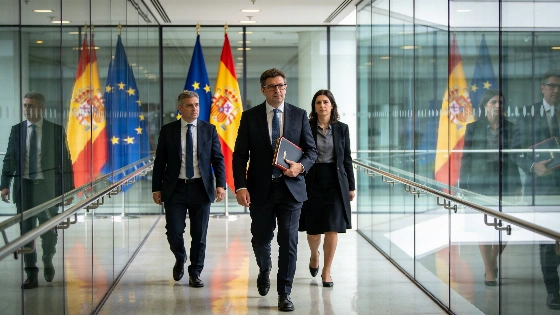
Spain is making a direct appeal in Brussels to secure a more stable European role for Ceuta and Melilla, its two enclaves on the North African coast. Foreign Minister José Manuel Albares arrived in the EU capital with a clear goal: to end the cities’ ambiguous status by demanding permanent representation in the Committee of the Regions and exploring their entry into the EU Customs Union. This follows President Pedro Sánchez’s formal presentation of a set of demands for Ceuta and Melilla in the Spanish Congress on September 3, 2026. The package included not only representation in the Committee of the Regions, but also a push for Customs Union inclusion and recognition as ultra-peripheral regions.
The issue has become a political flashpoint in Madrid, with the government under pressure to deliver results. Albares’ visit is the first time Spain is officially presenting these demands to EU authorities, following Sánchez’s recent proposals in Congress. The government’s aim is to "Europeanize" Ceuta and Melilla, seeking both symbolic and practical integration into EU structures. According to Spanish and European media, the government is using the fact that Ceuta and Melilla are the EU’s only land border with Africa as a key argument for more European support and resources.
Ceuta and Melilla have never before had representation in the EU Committee of the Regions, making this campaign a significant institutional shift.
Securing a fixed seat for Ceuta and Melilla in the Committee of the Regions is seen as the most realistic goal. Spain currently holds 21 seats, with 17 for autonomous communities and four for local representatives. The plan would require the Federation of Spanish Municipalities and Provinces (FEMP) to allocate one or two of these rotating seats permanently to the enclaves. This would give Ceuta and Melilla a stable voice in EU regional policy, a step up from their current marginal role. According to several sources, this would not require new EU quotas, just a redistribution of existing Spanish seats, making it a feasible step.
Albares is also meeting with key EU commissioners, including Magnus Brunner (Interior and Migration) and Maroš Šefčovič (Trade), as well as the EU’s top diplomat Kaja Kallas. Talks with Brunner will focus on migration management, EU border support, and the deployment of Frontex personnel in Ceuta. Spain is seeking more EU involvement in border security and asylum processing, as well as financial help for the cities. Brunner has already discussed these issues with Spain’s Minister of Territorial Policy, Ángel Víctor Torres, and described the talks as "constructive." The European Commission says there has been "important progress" on emergency assistance for Ceuta, including operational and financial support for border management.
The proposal to include Ceuta and Melilla in the EU Customs Union and to recognize them as outermost regions is more complicated. Achieving outermost region status, which would put the cities in the same category as the Canary Islands, Azores, and French overseas departments, requires a treaty change, a European Commission proposal, consultation with the European Parliament, and unanimous approval by all 27 EU members. This status would allow for more EU funding and special tax regimes, but the process is lengthy and politically sensitive. Customs Union entry is a separate procedure that also needs unanimous agreement among EU member states, making it a much tougher and slower goal.
Brussels is preparing to send a technical mission to Ceuta to assess the city’s needs and consider strengthening the roles of Frontex, Europol, and the EU Agency for Asylum. This move is directly linked to Madrid’s request for deeper EU involvement in border management.
Entry into the Customs Union is another challenge. While it would bring Ceuta and Melilla into the EU’s free trade area, the cities already benefit from special tariff exemptions. The government admits that joining the Customs Union would involve trade-offs, and local authorities will have to weigh the benefits against possible losses. Still, officials argue that deeper EU integration would strengthen the cities’ position in Europe. Reports from El Confidencial and Democrata note that the process could be delayed by the need for consensus among all EU partners, and the political sensitivity is heightened by Morocco’s likely negative reaction to any move seen as "Europeanizing" the enclaves.
The timing of Albares’ trip is deliberate. Although the visit was originally planned with a broader agenda, it now focuses almost entirely on Ceuta and Melilla. The foreign minister will also meet with Dubravka Suica, the European Commissioner for the Mediterranean, and has offered to meet Ceuta’s president, Juan Jesús Vivas, who is also in Brussels. That meeting is still unconfirmed.
Spain’s push for EU recognition of Ceuta and Melilla comes at a time of heightened political stakes at home. As reported earlier, the government is under fire over its handling of the Ceuta crisis and is looking to shore up support by delivering results in Europe. The move to anchor the cities within EU institutions is as much about domestic credibility as it is about European policy.
Ceuta and Melilla have long had a unique legal and political status. They are fully part of Spain but excluded from the Schengen Area and the EU Customs Union, with their own tax and border rules. Their status has made them flashpoints for migration and diplomatic friction, especially with Morocco, which does not recognize Spanish sovereignty over the territories. The current initiative signals a shift in Madrid’s approach, moving from crisis management to proactive institutional integration. Several European policy analysts say the risk of diplomatic tension with Morocco remains a key concern for Spanish and EU officials.
The Spanish government is betting that a stronger EU role in Ceuta and Melilla will help stabilize the cities and send a message to both domestic critics and international partners. The outcome depends on whether Brussels is willing to accommodate these demands, given the legal and political hurdles. For now, Albares’ high-profile mission puts the issue on the EU agenda, but the result will depend on Spain’s ability to persuade both European institutions and local stakeholders that deeper integration is worth the trade-offs.