Pedro Sánchez invokes the German far right’s victory to rally PSOE amid mounting criticism over Ceuta. The government promises transparency but avoids direct mention of Morocco. Tensions rise as support erodes and new budget battles loom.
Pedro Sánchez and the PSOE leadership are under pressure after the far right's strong showing in Saxony-Anhalt, which Sánchez used to urge his party to regroup. At the same time, his government faces growing criticism over its handling of the Ceuta border crisis. Internal morale is low, and public confidence is slipping—a recent poll found that 63% of Spaniards are dissatisfied with how the border standoff has been managed. European analysts, according to El País, see the German results as a warning for mainstream parties, adding to the urgency inside PSOE.
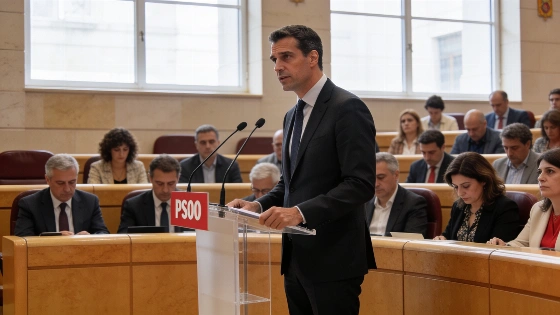
Sánchez addressed PSOE deputies, senators, and MEPs with warnings about the far right's rise in Europe, pointing to Alternativa para Alemania’s 44% result as a serious threat. He argued that Spain’s progressive coalition is now the last major barrier against a continent-wide reactionary wave. But his comments on Ceuta were brief and avoided self-critique, even as the crisis entered its sixth week without resolution. Reuters reports that opposition parties continue to demand clarity on the government’s border strategy and its approach to Morocco.
In June, the German federal election saw the far-right AfD become the second-largest party in Saxony-Anhalt, marking its strongest regional performance to date.
Sánchez promised that Ceuta would "soon return to normal" and that the government’s actions would leave the city "stronger," but he did not mention Morocco directly. This is notable, since 90% of those polled blame Rabat for the influx of irregular migrants. Instead, Sánchez linked his government’s declining support to attacks from what he called the "international far right." The Spanish Ministry of the Interior says the number of irregular border crossings in Ceuta during the crisis reached a record high for the enclave.
The government now plans to declassify documents about the origins and management of the Ceuta crisis. Sánchez has promised transparency and said he will clarify what happened during the July surge, when 80,000 irregular migrants entered Ceuta and 72,000 left in the following days. He said those entitled to asylum would receive it, while others would be returned, following Spanish law. Some civil society groups have welcomed the move to declassify documents, but critics say it may not address the deeper diplomatic tensions with Morocco.
The European Commission has repeatedly urged Spain and Morocco to strengthen cooperation on border management, emphasizing the need for joint solutions to prevent future crises. In 2021, the EU allocated additional funding to support Spain's border infrastructure and humanitarian response in Ceuta.
Despite these assurances, the mood inside PSOE is uneasy. The party’s parliamentary ranks, once buoyed by Sánchez’s international profile and his stance on military spending and Gaza, now face renewed judicial scrutiny and political fatigue. The recent call for Begoña Gómez to appear in court has added to the sense of vulnerability, echoing the isolation felt by Madrid’s leadership during the penthouse scandal reported earlier.
Sánchez is trying to position PSOE as the only effective counterweight to the far right, warning that traditional conservatives are enabling extremist advances. He urged his party to stay ambitious and not give in to what he called an "alliance of regression" between a radicalized right and a stronger far right. This approach is similar to his earlier warnings about PP-VOX pacts before the 2023 general election.
The government’s ability to pass a new budget will be a key test. The last approved budget was in 2023, and Sánchez has promised that the next one will include the largest social spending in Spanish history. If he cannot secure support from the investiture bloc, early elections could follow—a scenario some PSOE officials now see as preferable to waiting until after next May’s regional and municipal votes.
On policy, Sánchez defended the recent reform of the regional financing system, which passed with support from Catalonia and the Canary Islands but faced opposition from other regions wary of previous deals with ERC. He also renewed calls for a national pact on climate emergencies, criticizing regional leaders who, in his view, prioritize tax breaks for elites over investment in public services and disaster prevention. Madrid’s president, Isabel Díaz Ayuso, was singled out over housing policy, with Sánchez promising to protect the right to affordable homes against what he described as luxury real estate excesses.
Spain’s political scene is now shaped by a government fighting on several fronts: defending its record on social and economic policy, managing a drawn-out border crisis, and countering the narrative of a resurgent far right at home and abroad. The government’s reluctance to confront Morocco directly, along with its focus on external threats, points to a leadership more concerned with rallying its base than addressing the root causes of its current problems. As the next budget fight approaches, Sánchez is betting on framing PSOE as the last line of defense against extremism, even as doubts grow inside the party and pressure mounts from outside. Whether this strategy can reverse PSOE’s slide is unclear, but the outcome will shape Spain’s political future.