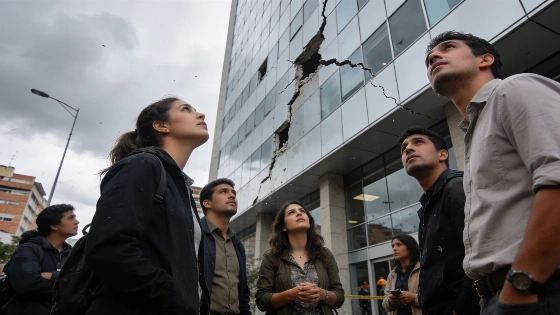
A 7.4-magnitude earthquake struck western Colombia early Monday. The tremor was felt in Bogotá and Medellín. Authorities report no major damage, but buildings were evacuated as a precaution.
Early Monday morning, a powerful earthquake with a magnitude of 7.4 struck the western part of Colombia, causing alarm in several major cities. According to the US Geological Survey (USGS), the epicenter was located in San José del Palmar, Chocó, approximately 280 kilometers west of Bogotá, at a depth of 107 kilometers. The tremor was registered at 7:34 a.m. local time (8:34 a.m. Miami time), and its impact was quickly felt across the country.
In Bogotá, the capital, the quake triggered emergency alarms and prompted immediate evacuations from numerous buildings. Residents left offices and homes, gathering in open areas as a safety measure. The mayor of Bogotá, Carlos Galán, stated that, as of now, there have been no reports of significant structural damage, though some buildings have developed cracks. The situation remains under close observation by local authorities.
Medellín also experienced a strong tremor, with the city's mayor confirming the event and noting that municipal teams are actively checking for any possible damage. So far, no serious incidents have been reported, but inspections are ongoing to ensure public safety. The rapid response from emergency services in both cities helped maintain order and prevent panic during the evacuation process.
While the earthquake did not result in major destruction, the event highlights the vulnerability of urban centers in the region to seismic activity. Colombia, situated along the Pacific Ring of Fire, is no stranger to earthquakes, and authorities regularly conduct drills to prepare for such emergencies. The swift evacuation in Bogotá and Medellín demonstrates the effectiveness of these preparedness measures.
For comparison, recent incidents in Spain have also tested emergency response systems. For example, a forest fire in Navas de San Antonio led to road closures and rapid action by local teams, underscoring the importance of readiness for natural disasters in both countries.
Colombian authorities continue to monitor the situation and advise residents to remain alert for possible aftershocks. The event serves as a reminder of the ongoing need for robust emergency protocols in regions prone to seismic and other natural hazards. As of the latest updates, no casualties have been reported, and life in the affected cities is gradually returning to normal, though vigilance remains high.
Colombia's seismic risk is among the highest in South America due to its location at the convergence of several tectonic plates. The country has experienced devastating earthquakes in the past, prompting ongoing investment in building standards and public awareness campaigns. The recent quake, while significant, appears to have caused limited damage thanks to these efforts and the depth at which it occurred. Authorities emphasize the importance of continued preparedness and public cooperation in future emergencies.