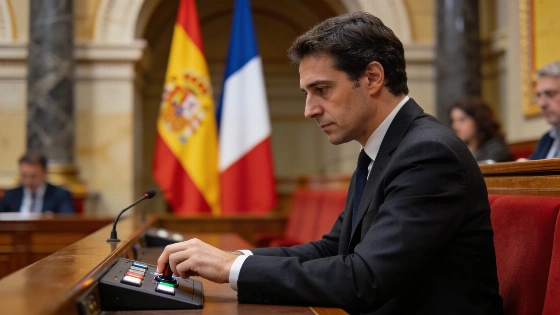
On 29 September 2026, Spain's Senate rejected the Treaty of Friendship and Cooperation with France by 142 votes to 106, with one senator abstaining. The vote stopped ratification despite the Constitutional Court's finding that the agreement does not conflict with the Constitution.
The treaty was signed by Pedro Sánchez and Emmanuel Macron in Barcelona in January 2023, more than a year before the approval process could be completed. The vote took place during Tuesday's plenary session. The PP used its absolute majority.
Macron is due to meet King Felipe VI and Sánchez during his state visit. Paris had expected the treaty to win approval soon.
The dispute centres on one provision. The original text allowed a French minister to take part in Spain's Council of Ministers. The PP challenged that clause before the Constitutional Court. The same issue led Congress to reject the agreement in May 2025.
Both foreign ministers agreed on a revised interpretation in April. Under that understanding, the French minister would attend an ad hoc meeting held alongside the ministers' meeting, rather than Spain's formal Council of Ministers. Congress approved the treaty in June.
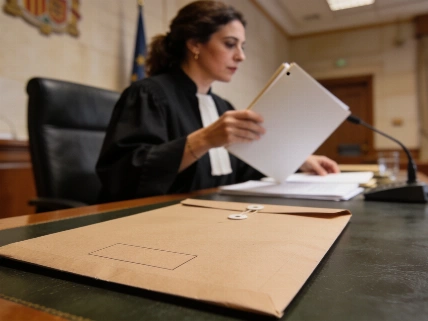
The Constitutional Court then rejected the Senate appeal filed at the PP's initiative. On 23 September 2026, it ruled that the treaty was compatible with the Constitution, including the clause on ministerial participation.
The legal ruling changed nothing in the Senate. The constitutional objection was gone, but the political opposition remained.
During the debate, Pilar Rojo defended the PP's position. She said the decision did not question France's strategic importance as a neighbour and ally within Europe. Her argument was that friendship between two countries cannot depend on one treaty or require approval of every instrument sent to Parliament.
Rojo also said agreements linked to the treaty must carry the strongest possible legal and institutional guarantees. The PP kept its political objection separate from the Constitutional Court's assessment. It refused to support the text after the court cleared it.
The vote fits a wider record of PP opposition to the government's handling of national security and institutional decisions. An earlier report described the party's position on Ceuta in an earlier report.
The result is clear: a treaty approved by Congress and backed by the Constitutional Court remains unratified after the Senate rejected it.
The timing gives the decision added diplomatic weight. Macron's meetings with Felipe VI and Sánchez begin while the agreement he signed with the Spanish prime minister remains blocked in one parliamentary chamber. That is the central political fact of the visit.
El País and other Spanish outlets reported that the French side expected the Constitutional Court's endorsement to clear the way for quick Senate approval. It did not.
The court's approval was not enough to secure passage. The PP used its majority to stop ratification over legal and institutional guarantees it still considers insufficient. Until that position changes, the pact cannot complete the approval process. The dispute over the ministers' meeting remains the practical barrier.