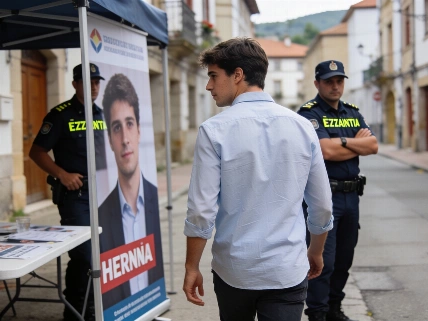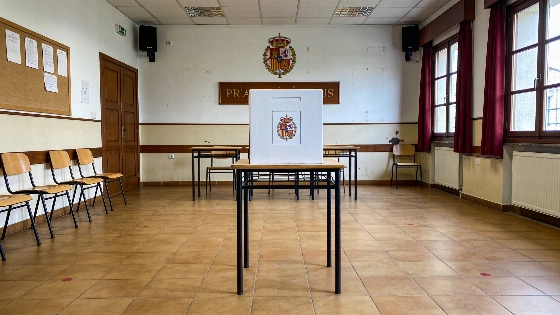
The PP’s proposal would allow people who left the Basque Country or Navarra because of ETA terrorism to vote in the municipality where they were registered before departing. It would require a reform of electoral law and cover regional elections in both territories.
The measure appears in point 132 of the party’s Reconstrucción Nacional programme. Its wording refers to people who had to leave because of ETA terrorism. Despite the “law of grandchildren” label used by the PP, the text does not extend the proposed voting right to their descendants.
The proposal is separate from the citizenship route often called Spain’s law of grandchildren, which stems from the Democratic Memory Law. In a separate overseas-voting case, Spain’s Supreme Court on 9 November 2026 refused to extend a suspension of voting rights to the adult children of people naturalised under the law. The litigation concerned about 189,678 adult children, a figure that reportedly includes descendants of people naturalised under both the 2022 Democratic Memory Law and the earlier 2007 Historical Memory Law. The ruling addressed interim measures rather than finally deciding the legality of their electoral registrations. The court cited legal certainty and electoral stability ahead of the 29 November general election.
The court case concerned the descendants’ possible inclusion in the Census of Absent Residents (CERA), not the PP’s proposed regional voting arrangement. Separate reports put the number of people whose voting rights remained suspended at 163,355 among those who had directly obtained nationality through the relevant provision, with 901 exceptions for people who proved they were descendants of Spanish exiles. Those figures relate to the overseas-voting dispute, not to people displaced from the Basque Country or Navarra by ETA.
On 10 November, Iustitia Europa, represented by its president and attorney Luis María Pardo, appealed the refusal to suspend the descendants’ voting rights. The group argued that their participation could affect the election result. The Supreme Court admitted a further appeal for processing on 11 November. That procedural step opened examination of the case but did not decide its merits or order the descendants removed from CERA.
A separate account of a dispute over police action at strike pickets involving Podemos is available in this earlier report.