The Partido Popular has reversed its position and now urges an end to violence in Ceuta. This comes after criticism for not condemning recent attacks on migrants. All local parties have now signed a joint statement against violence.
The Partido Popular (PP) has made a significant shift in its public position on the recent unrest in Ceuta, moving from cautious statements to an explicit call for calm and a clear condemnation of all forms of violence in the city. This change comes after a wave of criticism over the party’s initial reluctance to denounce attacks targeting migrants, which had sparked concern among both local authorities and national leaders.
The first sign of this new approach appeared during a session of the Interior Commission, where Jesús Celaya Brey, PP deputy for Ceuta, addressed the issue directly. He acknowledged the frustration and anger among Ceuta’s residents, attributing it to what he described as government inaction, but insisted that violence and intimidation—whether against journalists or humanitarian workers—were unacceptable and only served to distort the reality of who the true victims are in the current crisis.
Shortly after, Elías Bendodo, the party’s deputy secretary, reinforced this message, underlining the need for restraint and emphasizing that violence cannot be met with more violence. He called on the government to take responsibility for the ongoing crisis, arguing that the executive’s lack of response had left Ceuta in a prolonged state of uncertainty. According to Bendodo, the PP understands the desperation felt by the local population but insists that order must be restored through lawful means, not through acts of aggression.
This public correction by the PP coincided with a rare moment of unity in Ceuta’s political landscape. All parties represented in the city’s Assembly, including the PP, signed an institutional declaration rejecting any use of violence. The statement, read by Ceuta’s president Juan Jesús Vivas, also from the PP, stressed that violent actions do not represent the city’s residents and only serve to divide and damage Ceuta’s image.
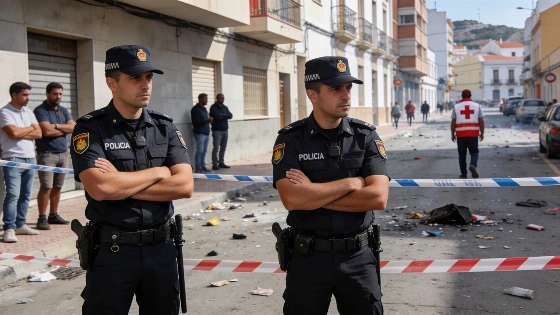
The government had previously appealed to all parties, and especially to the PP, which has governed Ceuta for a quarter of a century, to join in condemning the violence. This followed a series of incidents, including the burning of part of a migrant camp on a local beach and attempts to block the Red Cross from distributing food. The situation prompted Ángel Víctor Torres, head of the single command overseeing the crisis, to coordinate a joint anti-violence message with Vivas, but further pressure was needed to secure a unified response in parliament.
Initially, the PP had avoided a firm condemnation of attacks by Ceuta residents against migrants, focusing instead on an incident where a group of migrants assaulted a military convoy, injuring four officers. When questioned about the risk of residents taking justice into their own hands, PP spokesperson Borja Sémper pointed to the desperation in Ceuta and placed responsibility on the government, reiterating the party’s general opposition to violence but not addressing the attacks on migrants directly. Parliamentary spokesperson Ester Muñoz also suggested that residents were simply trying to restore order in the absence of government support.
With the situation in Ceuta growing more volatile, the PP’s leadership has now moved to clarify its stance, explicitly condemning all violence regardless of the target. This marks a notable change in the party’s rhetoric and aligns it with the broader political consensus in the city. The shift comes amid ongoing scrutiny of the government’s crisis management, as highlighted in recent coverage by RUSSPAIN, which examined the political fallout and the role of national authorities in Ceuta’s ongoing challenges. For further background on the government’s response and the political context, see the analysis of Defence Minister Robles’ position on Ceuta’s status and the military’s involvement at this detailed report.
Ceuta, a Spanish autonomous city on the North African coast, has long been a focal point for migration and border tensions. The recent surge in violence has underscored the fragility of local order and the importance of coordinated political action. The PP’s revised position may help to ease tensions, but the underlying issues of migration management and social cohesion remain unresolved. The city’s experience reflects broader challenges facing Spain’s border regions, where political, humanitarian, and security concerns often collide.