Elías Bendodo, PP spokesman, publicly criticized the government for prioritizing holidays over urgent issues. The remarks, made in Tarifa, reignited debate on political responsibility during August. The controversy highlights ongoing tensions.
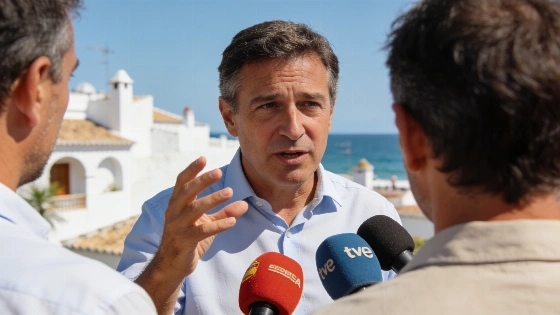
Political tensions escalated in Tarifa (Cádiz) as Elías Bendodo, the Partido Popular's spokesperson and Deputy Secretary for Regional and Local Coordination and Electoral Analysis, sharply criticized the government for what he described as a lack of commitment during the August holiday period. Speaking on Sunday, Bendodo accused ministers of focusing on vacations and photo opportunities instead of addressing pressing national concerns.
Bendodo's comments, delivered during a public appearance, underscored a familiar line of attack in Spanish politics: the claim that officials neglect their duties during the summer. He argued that this pattern is not exclusive to any one party, but pointedly targeted the current government for what he called 'vacation demagoguery.' The remarks quickly drew attention, as Bendodo managed to accuse the government of both being absent and seeking publicity in the same statement, without acknowledging any contradiction.
The debate over political holidays is not new in Spain. Each summer, criticism resurfaces regarding the visibility and activity of government officials during August, a month traditionally associated with reduced political activity. Bendodo's intervention in Tarifa comes amid broader scrutiny of how leaders balance personal time with public responsibilities. This issue has previously sparked public debate, as seen when operational lapses and communication failures during the Ceuta crisis led to accusations of absent leadership. For example, recent analysis of the Ceuta situation highlighted how perceptions of officials being on holiday can fuel public frustration and calls for accountability.
While Bendodo's statements focused on the central government, he also acknowledged that similar criticisms could apply to regional administrations, emphasizing that the issue transcends party lines. The controversy reflects a broader pattern in Spanish politics, where the summer period often becomes a flashpoint for disputes over political priorities and public image. As August continues, the debate over officials' presence and engagement is likely to remain in the spotlight, with both government and opposition figures facing scrutiny over their actions during the holiday season.
In Spain, August is traditionally a month of minimal political activity, with many institutions operating at reduced capacity. However, recent years have seen increased public demand for continuous government attention to urgent matters, regardless of the calendar. The ongoing discussion about political holidays highlights the tension between established customs and evolving expectations of public service. As the political landscape remains polarized, such controversies are expected to persist, shaping public perceptions of leadership and responsibility.