The Museo del Prado has opened a major tribute to Queen Cristina of Sweden. Prince Daniel's visit brought the Swedish royal story into Madrid's cultural spotlight.
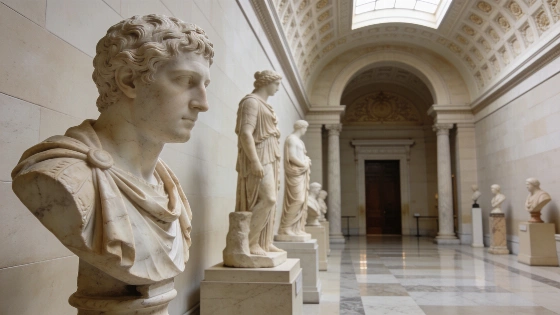
Prince Daniel of Sweden visited the Museo del Prado exhibition on Queen Cristina of Sweden, where marble works collected by the queen are on display in the renovated Sala 74. The sculptures link her years in Rome to royal collections later held in Spain.
The museum says the collection was assembled after Cristina's abdication. Felipe V and Isabel de Farnesio acquired the works in the 18th century for the Palacio Real de La Granja de San Ildefonso. The sculptures later entered the Museo del Prado's holdings.
Prince Daniel continued his tour in the Sala de las Musas, home to marble statues from the second century AD. Those works also once belonged to Queen Cristina of Sweden.
During the visit, the Swedish prince recognised pieces that had stood in royal settings in Sweden. The connection felt personal.
The Madrid programme began with a contemporary element before turning to the past. Spanish delegation representatives, including Miguel Falomir, director of the Museo del Prado, welcomed Daniel at the museum.
Officials presented gifts to the prince. Artificial intelligence (AI) also featured in the first part of the visit.
The opening sequence included an image of students working with Cristina Aranda and Ruth Falquinq. The secretary of state for the European Union then joined the visit, adding an institutional element beyond the museum ceremony.
Daniel's arrival had already drawn attention along the Paseo del Prado. The security convoy entered central Madrid late in the morning, catching the attention of people walking through the cultural district.
The visit soon moved inside. Daniel examined the sculptures and traced their path into Spain's royal collections.
The exhibition makes that history easier to follow. It presents Cristina's life through her art and the choices behind her sculpture collection. Those works later entered the holdings of the Spanish Crown.
The Prado connects the Bernadotte dynasty with the Spanish royal tradition that preserved the pieces. The galleries trace the collection's history from Rome and Sweden to Spain.
Marble figures associated with Cristina's collection link the two royal histories. Prince Daniel's visit puts that shared past in the public eye, while the Prado offers a place to see the connection firsthand.