Images of Marcos Llorente and Ferran Torres showing affection in Ibiza have reignited debate on masculinity in Spain. Social reactions highlight how homophobia and patriarchy restrict emotional expression among men.
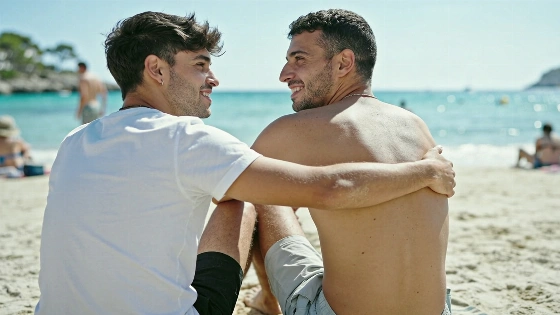
Photos of footballers Marcos Llorente and Ferran Torres embracing and kissing on Ibiza beaches have triggered a wave of online commentary in Spain. The images, widely shared on social media, quickly became a focal point for jokes and speculation about the players’ sexual orientation. The incident has reignited discussion about how public displays of affection between heterosexual men are often met with suspicion or ridicule, reflecting deep-rooted cultural attitudes.
Journalist Pablo Maca, commenting on the controversy, noted that tenderness between men is frequently viewed as suspect, with physical contact only deemed acceptable in competitive or aggressive contexts. His remarks, shared by Borja Iglesias, underline how patriarchal norms continue to shape expectations of masculinity, discouraging men from expressing warmth or closeness with friends for fear of having their masculinity questioned.
Similar dynamics have played out internationally. During the World Cup, moments of camaraderie between Jude Bellingham and Erling Haaland, both friends since their time at Borussia Dortmund, were recirculated online with an erotic undertone, further blurring the line between friendship and romantic implication in the public eye. These reactions highlight how heteronormative expectations and homophobia combine to police male behavior, making it difficult for men to show affection without facing stigma.
Ulises García Figueroa, a doctoral researcher in ethnomusicology and gender studies, explains that the real issue is not the affection itself, but the societal gaze shaped by heteronormativity and homophobia. According to García Figueroa, these norms are not static but evolve over time and across cultures, yet they consistently pressure individuals to conform. When heterosexual men deviate from these expectations, their actions are scrutinized, and homophobia adds a layer of stigma and potential punishment, affecting both homosexual and heterosexual men by dictating how they should behave to avoid prejudice.
Reality television has also reflected these tensions. On Love Island USA, the close friendship between Zach Georgiou and Bryce Dettloff became a talking point, with producers reportedly using their bond to create a subplot, inspired by the popularity of Más que Rivales—a series centered on a relationship between two men that has resonated especially with female audiences. Meanwhile, Michael Urie, star of Terapia sin filtro, observed that his show has given heterosexual men a rare space to discuss their feelings, though many still hesitate to do so publicly for fear of undermining their masculinity.
In The New Yorker, Alexandra Schwartz described how the series DTF St. Louis presents a rare depiction of two middle-aged American men openly expressing affection and admiration for each other, without taboo or suspicion. Such portrayals remain unusual, as even simple gestures like holding hands can provoke doubt when performed by heterosexual men.
According to Lionel S. Delgado, an expert on masculinity and equality, emotional inaccessibility among men poses a risk to mental health. He attributes this not to individual men, but to the cultural environment that enforces these behaviors. Delgado also notes that even within the LGTBIQA+ community, building intimacy without centering on sexuality can be challenging.
Recent data from the Barómetro de la Soledad indicate that 18% of men in Spain experience unwanted loneliness. The World Health Organization has recognized male loneliness as a public health issue. Despite this, social ridicule of men who display affection continues to reinforce a restrictive model of masculinity, casting doubt on the legitimacy of male friendships and contributing to broader issues of isolation and mental well-being.
Spain, like many countries, is grappling with the consequences of these cultural norms. While public debate has intensified following high-profile incidents, practical change remains slow. Experts suggest that challenging entrenched attitudes about masculinity and affection is essential for improving mental health outcomes and fostering healthier relationships among men. The ongoing conversation reflects a broader shift in Spanish society, where traditional gender roles are increasingly questioned, but resistance to change persists in many areas of daily life.