Spanish singer Ramoncín, now 70, has spoken about his early years shaped by abandonment and resilience. Raised by relatives after his mother left, he describes his unconventional upbringing as a turning point.
Ramoncín, a prominent figure in Spain's music scene since the late 1970s, has shared new details about his difficult childhood, revealing how early family disruption shaped his life. Born unexpectedly in a taxi near Madrid's Puerta de Alcalá, his arrival was already unconventional. Just two years later, his mother left him in the care of his grandfather and aunt, a decision he now describes as transformative. According to Ramoncín, being raised by these relatives in the Delicias neighborhood provided him with a supportive environment that he calls 'wonderful,' despite the circumstances of his abandonment.
The singer, known for provocative hits like “El rey del pollo frito” and “Marica de terciopelo,” spoke candidly in a recent interview on Antena 3's “Y ahora Sonsoles.” He recalled that his mother’s departure, while painful, ultimately spared him from greater hardship. Years later, he reconnected with her, navigating the complexities of having two maternal figures in his life. Ramoncín emphasized that he never held resentment, instead focusing on the positive influence of his extended family.
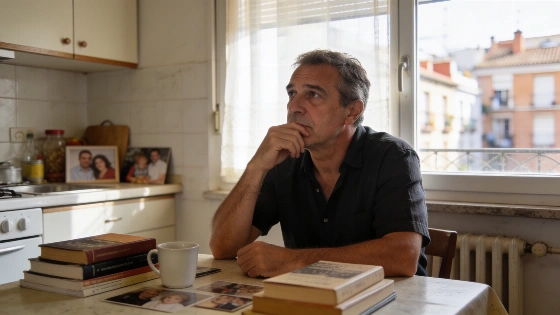
His grandfather played a central role, fostering a love of reading and imagination in a home where material luxuries were scarce but emotional support was strong. Ramoncín described evenings when his grandfather would read aloud with the windows open, neighbors listening in as part of the community’s daily rhythm. This early exposure to literature and storytelling left a lasting mark, shaping his creative outlook.
By adolescence, Ramoncín was already working—first as a bellboy, then in a record shop—reflecting the economic realities many Spanish families faced during the era. He described his teenage years as brief and intense, with adult responsibilities arriving early. The Madrid of the 1970s, which he called 'a pressure cooker,' became the backdrop for his rise to fame. Rather than seeking stardom, Ramoncín said his music was a way to express the realities of his neighborhood, with songs inspired by real people and daily life in Delicias.
His career unfolded during a period of rapid change in Spain, as the country transitioned to democracy and new freedoms emerged for artists. Ramoncín recalled the sense of making history, even if at the time he and his peers were simply seeking acceptance and the right to express themselves. The struggle for creative freedom, including the right to wear long hair and reject stereotypes, was central to his early years in music.
Stories of family and resilience are not unique to Spain. In other parts of the world, public figures have also shared intimate moments of personal transformation, such as the recent gathering of the Jordanian royal family to welcome Princess Iman's twin daughters, highlighting how family dynamics can shape public narratives. For more on this, see the coverage of Princess Iman's family milestone.
Ramoncín’s reflections offer insight into how adversity and support can coexist, shaping not only personal identity but also creative expression. His story underscores the importance of family bonds—whether biological or chosen—in overcoming early challenges. In Spain, where family remains a central value, such narratives continue to resonate, especially as the country reflects on the social changes of recent decades. The singer’s journey from a disrupted childhood to national recognition illustrates the enduring impact of early experiences on public figures and the broader cultural landscape.