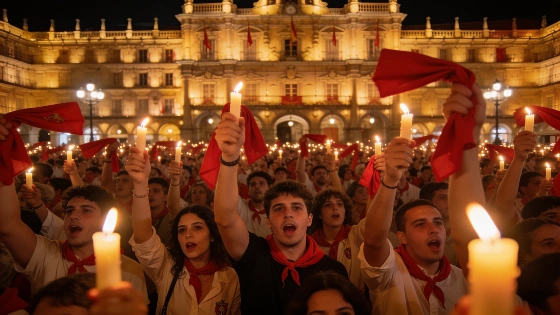
Thousands gathered in Plaza Consistorial at midnight as San Fermín 2026 came to a close in Pamplona, holding flickering candles and singing the traditional “Pobre de mí” farewell. After nine days in the festival’s iconic red and white, participants removed their scarves and joined the subdued send-off. RTVE reported that the square was packed with locals and visitors, many visibly moved as the festival ended after a year described as record-breaking for attendance and technological innovation.
This edition of Sanfermines stood out for the scale of participation and the growing use of digital and technical tools. The encierros brought dramatic moments, from the rapid pace set by La Palmosilla bulls in the opening runs to a dangerous final day. El Caso reported that two people suffered bull-horn injuries during the closing-day run, a reminder of the event’s enduring risks.
Miura bulls also featured during the week: El Caso reported that the seventh encierro resulted in eight injuries, none caused by horns. Their presence reflects the long-standing role of established ganaderías in the festival, where each morning’s run through Pamplona’s streets pairs spectacle with large danger. As the charanga’s final notes faded and fireworks signaled the end, the city shifted from celebration to anticipation of next year’s festivities.
San Fermín is one of Spain’s best-known festivals internationally, drawing visitors from across the globe. The encierros, or running of the bulls, are broadcast live and closely monitored for safety, with emergency services on alert throughout the week. This blend of tradition and risk has made the event a focal point of local culture and international tourism. A historical report in El País from July 1983 captured the scale of visitor pressure even then, saying Pamplona, whose population was about 180,000, could more than double in size during the festival weekend. The report also recalled a mayoral warning that nobody was obliged to run and participants voluntarily assumed the risks. That was a historical statement, not a description of current rules. As the city returns to normal, preparations for the next San Fermín are already underway, with July 7, 2027, marked on the calendar for another edition of the historic celebration.