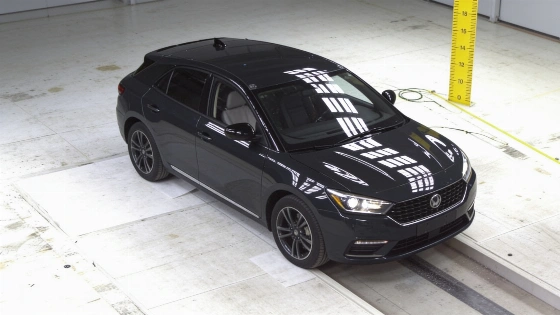
Rental cars registered in Spain are outperforming privately owned vehicles in safety tests. New figures reveal a clear lead for rental fleets in Euro NCAP ratings, highlighting the impact of frequent fleet renewal and strict maintenance.
Rental cars in Spain are pulling ahead of the pack. New data from the Asociación Española de Renting de Vehículos (AER) shows a clear lead: in the first half of 2026, rental companies registered passenger vehicles with an average Euro NCAP safety score of 4.56 out of 5 stars. The rest of the Spanish market averaged 4.43 stars. That gap is real.
The difference grows at the top. A full 62.35% of rental cars earned the maximum five-star rating. For all new registrations, the figure was 59.29%. Four-star results also favored rental fleets: 32.68% of their cars reached this level, compared to 29.40% in the wider market. In total, 85.91% of rental passenger cars scored either four or five stars in the tough European safety tests.
By the end of 2025, Spain's rental fleet surpassed 1 million vehicles, with new registrations in 2026 growing faster than the overall market.
Why do rental cars lead? The answer is simple. Rental fleets are renewed often. Companies keep their cars young and stick to strict maintenance. The average rental car in Spain is about two years old. That means most rental vehicles are among the newest on the road. Regular servicing keeps advanced safety features and the latest protection systems in every car. These are not rare extras. They are standard.
Euro NCAP breaks down safety into three main areas: adult occupant protection, child safety, and pedestrian protection. Rental cars scored 85.91% for adult occupants. The market average was 84.69%. In child safety, the gap is wider—84.30% for rental vehicles, 82.92% for all cars. Even in pedestrian protection, where differences are usually small, rental fleets still lead: 73.21% versus 72.70%.
These are not just numbers. Rental companies pick new models with safety in mind. They retire older cars before standards drop. The AER calls this cycle of renewal a key part of safer mobility. They also run driver education and awareness programs throughout a car's service life.
Since 2026, Euro NCAP ratings have incorporated not only crash protection but also advanced driver assistance systems and post-crash safety measures, making five-star scores a reflection of both passive and active safety technologies.
Not every car makes the top grade. Among rental vehicles, 3.94% got three stars, 0.76% two stars, 0.23% one star, and just 0.03% failed to earn any stars. The general market saw more cars in the lower categories: 7.26% at three stars, 3.32% at two, 0.58% at one, and 0.15% with none. The Instituto de Estudios de Automoción compiled this data using DGT registration records. All results were standardized for fair comparison.
Fleet renewal is not the only reason for the lead. Rental fleets have more advanced driver assistance systems and better occupant protection tech. The AER's work with the Alianza por la Seguridad Vial shows a wider push for safer roads and sharing best practices across the industry.
Spain's focus on safety goes beyond cars. New rules will soon ban uncertified electric scooters, as reported earlier. This is part of a national push for higher safety standards in all types of transport.
Rental cars top the safety charts for a reason. Companies invest in new tech, stick to strict maintenance, and retire cars before they get old. The data is clear. Drivers who pick rental cars get some of the safest vehicles on Spanish roads. This trend sets a tough standard for the rest of the market. In Spain, safety is now a must for anyone behind the wheel.