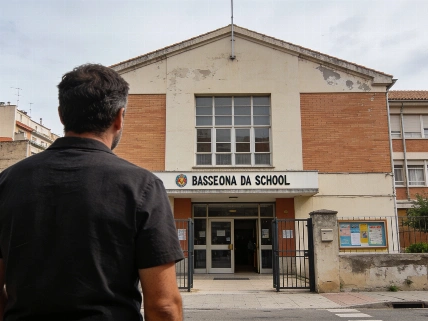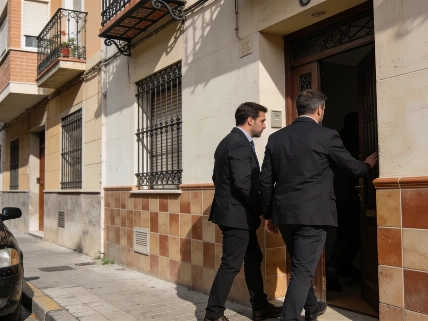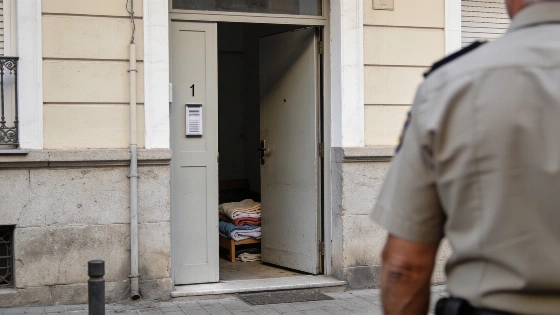
Officials enforced the eviction of 87-year-old Maricarmen at her Madrid home on 23 September 2026. Police were there as the judicial commission arrived, while protesters gathered outside.
Maricarmen had lived in the apartment for decades under a tenancy agreement signed in 1956. The final ruling found that the contract had ended after the legal limit on its second succession.
The eviction followed an order issued after the Supreme Court left the Madrid Provincial Court's decision in force. The case also drew a political response across Spain.
The Supreme Court accepted that Maricarmen had succeeded to the tenancy. Its ruling turned on how long the agreement could continue after that succession.
Urbagestión Desarrollo e Inversión S.L. asked the courts to recover the home, arguing that the second succession could not last for life. That transfer followed Maricarmen's mother's death in 2005. The contract had already passed once, in 1960, after the death of its first holder.
The first-instance court initially rejected the owner's claim. In its ruling of 27 January 2022, Madrid's Court of First Instance number 90 said the property owner had tacitly accepted Maricarmen as the tenant. She remained in the apartment and paid rent for years; the owners' conduct was consistent with that tenancy.
The appeal changed the case. On 30 June 2022, the Ninth Section of the Madrid Provincial Court partly upheld Urbagestión's appeal and declared the 1956 lease terminated.
The judges applied transitional provision Second B of the 1994 Urban Tenancy Law. Under their interpretation, the second succession lasted two years unless the tenant qualified for an exception based on a disability of at least 65 percent. Onda Cero and other Spanish outlets reported that Maricarmen's disability was assessed at 50 percent. The court said the requirements for extending the agreement until her death had not been proved.
The ruling did not lead to her immediate removal. Although the contract was treated as expired two years after the 2005 succession, Maricarmen stayed in the home and continued paying rent. The Provincial Court treated those payments as a tacit renewal, with the tenancy continuing through annual extensions.
Ownership changed in June 2018. Urbagestión acquired the property, informed Maricarmen that it was the new owner and provided a bank account for future rent payments.
The rent was updated under the 1994 law. Later, the company asked her to prove conditions tied to the succession, including a disability above 65 percent and registered residence in the property. The court rejected the argument that these steps barred the owner from seeking termination, and the legal dispute continued.
Maricarmen appealed to the Supreme Court. In an order dated 13 December 2023, the court refused to admit the appeal, leaving the Provincial Court's judgment final.
A previous court report on this publication's legal news pages covers another case involving Josep Juanpere and a prison order. You can read it here. The Retiro case hinged on how long an old tenancy succession could last.
The record shows the conflict between continued rent payments and legal limits on inherited leases. Maricarmen's long occupation and the owner's acceptance of payments shaped the first ruling, but did not change the later interpretation of the 1994 law.
EL PAÍS and Euronews reported that the case also became a public symbol of Spain's unresolved "renta antigua" contracts, many of which began under older rental rules. The eviction followed the final decision on the contract's duration; the ruling did not deny that the second succession had taken place.