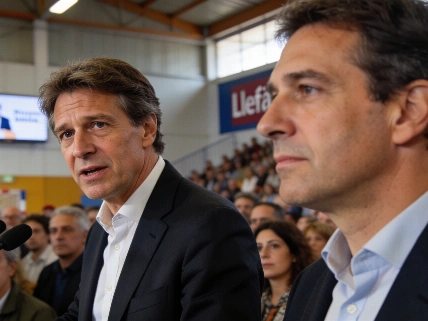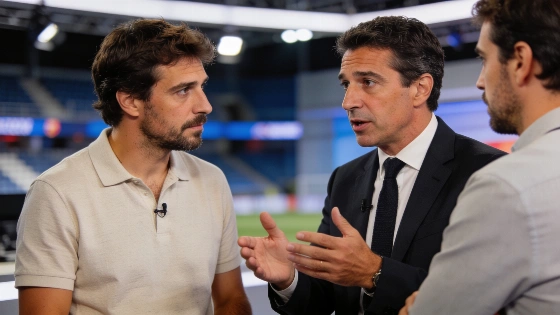
Juan Carlos Rivero, a well-known sports journalist and commentator for Televisión Española, has stirred debate in Spanish football by suggesting that Spain national team coach Luis de la Fuente is acting as Barcelona's de facto sporting director. Rivero made the comment during a Twitch discussion with Siro López and Nacho Palencia, a Radio MARCA contributor, arguing that Barcelona often targets players who have excelled under De la Fuente with the national team.
Rivero's point was that although De la Fuente holds no official position at Barcelona, his work with the Spanish squad appears to influence the club's transfer strategy. One recent example linking Spain performances with Barcelona's recruitment interests is Tottenham right-back Pedro Porro. In a report published on 19 October 2026, El Nacional described Porro as a Barcelona target and linked part of his appeal to his performances for Spain, where De la Fuente paired him with Barcelona winger Lamine Yamal. Porro's width and defensive support allowed Yamal to move into interior positions more often, information from the report. The account offers a footballing rationale for Barcelona's interest, not evidence of a formal role for the Spain coach in the club's transfer decisions.
The relationship also runs in the other direction: Barcelona-developed players can come into consideration for Spain. On 21 October, El Nacional described 19-year-old right-back Xavi Espart as a possible future senior international after he scored against Paris Saint-Germain in a Champions League match on 20 October. His potential progression from Barcelona's first team to the national side shows how club development and national-team selection can overlap, while selection decisions remain with De la Fuente.
The remark quickly gained traction on social media, where users debated whether Barcelona's recent signings reflect a broader trend of relying on the national team's talent pool. Some commentators questioned the implications for the club's identity and long-term planning, while others saw it as a pragmatic response to the success of Spain's youth development system. The discussion also touched on the broader relationship between club and country, which has generated heated exchanges before, including when political debates in Oviedo spilled into football, as in the recent controversy over public tributes to foreign leaders.
Barcelona's transfer policy has often faced scrutiny, particularly during periods of transition or when the club is under pressure to rebuild its squad. The distinction between a coach's influence on player profiles and formal authority over recruitment sits central to Rivero's characterization. De la Fuente remains publicly identified with Spain's national-team leadership: on 19 October 2026, the Royal Spanish Football Federation reported that he and its president, Rafael Louzán, led a delegation presenting the World Cup trophy at Zaragoza's Cathedral-Basilica of Our Lady of the Pillar. The episode placed De la Fuente in an official federation setting, while the Porro and Espart examples show how national-team selection can intersect with Barcelona's player interests.
Luis de la Fuente has been credited with revitalizing Spain's national team by integrating young talent and fostering a cohesive playing style. Barcelona, historically known for its own youth academy, La Masia, has in recent years looked beyond its traditional sources for new signings. Porro's international partnership with Yamal and Espart's emergence show two distinct links between club football and the national side: Spain performances can shape a player's profile, while club development can bring young talent into national-team consideration. That overlap helps explain why Rivero's comment resonated in a debate about recruitment and youth development, including the influence of figures outside the club.