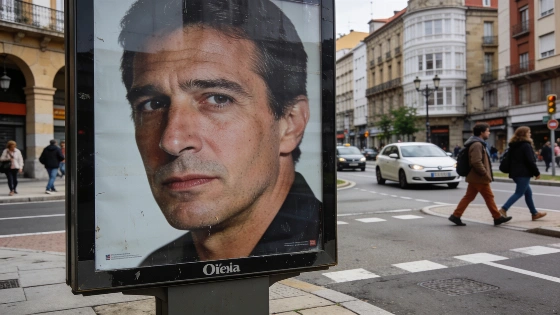
Five billboards with Nayib Bukele’s image appeared at Oviedo’s main roads. The campaign is a personal tribute by local businessman Tino Vidal. The move has sparked political debate in the city.
Five large billboards featuring the image of Nayib Bukele, president of El Salvador, have appeared at key entry and exit points in Oviedo, drawing immediate attention and sparking debate across the city. The campaign, which shows Bukele wearing his presidential sash and making a gesture reminiscent of a military salute, is not an official initiative from El Salvador’s government. Instead, it is the work of Tino Vidal, a 71-year-old advertising entrepreneur originally from Luarca and long-time Oviedo resident, who describes the project as a personal homage to a leader he deeply admires.
Vidal, who has spent decades in the advertising sector, explained that he knows Bukele’s speeches by heart and considers him the world’s best president. He arranged for the billboards to be placed at prominent locations around Oviedo, each displaying the phrase: “Nayib Bukele. ¡Presidente Universal!”. According to Vidal, the images have even reached Bukele’s inner circle, thanks to a mutual acquaintance who shared photos of the campaign.
The billboards quickly became a talking point on social media and soon entered the local political arena. Juan Álvarez, a PSOE councillor in Oviedo, criticized the campaign online, arguing that it reflects a worrying fascination with authoritarian leadership. He warned that such displays could become more common as the 2027 municipal elections approach. His comments drew a sharp response from Sonsoles Peralta, municipal spokesperson for Vox, who defended Bukele’s record on public safety in El Salvador and accused critics of ignoring the country’s past struggles with gang violence.
The exchange did not end there. Álvarez countered by highlighting that Asturias enjoys significantly lower crime rates and greater stability than El Salvador under Bukele. The debate caught the attention of former Vox deputy Macarena Olona, who publicly invited Álvarez to attend a future conference in Oviedo on Bukele’s security model, suggesting it would help explain the presence of such billboards in Spain.
While the campaign is not linked to any official Salvadoran outreach, it has nonetheless stirred local discussion about political symbolism and the influence of international figures in Spanish public life. The appearance of the billboards comes just over six months before the next municipal elections, adding a layer of political tension to the city’s atmosphere. According to municipal records, 51 Salvadoran nationals are currently registered as residents in Oviedo.
Political displays on public streets have previously triggered controversy in Spain, especially when they intersect with debates on migration, security, and leadership. For example, recent disputes over government property and migration policy in Ceuta have also drawn national attention, as seen in the coverage of Ayuso’s renewed scrutiny over a luxury apartment amid the Ceuta crisis. Such incidents highlight how local actions can quickly become focal points for broader political arguments.
Billboards and other forms of public advertising remain a powerful tool for shaping debate in Spain’s cities, especially when they touch on themes of leadership, security, and identity. The Oviedo case underlines how individual initiatives can ignite citywide—and even national—conversations, particularly in the run-up to elections.