RTVE president José Pablo López will ask the board to keep Spain out of Eurovision for a second year. He says reforms by the European Broadcasting Union have not secured the neutrality Spain demanded over Israel's participation.
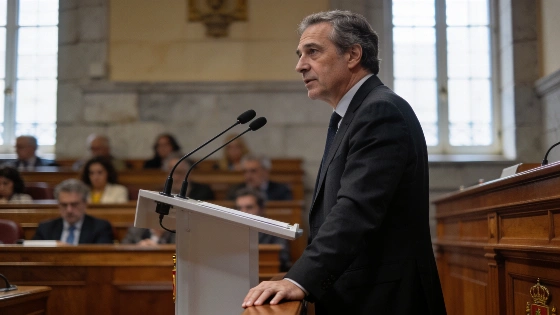
RTVE president José Pablo López will propose keeping Spain out of Eurovision for a second consecutive year. He made the announcement before the Senate's Joint Parliamentary Committee overseeing RTVE. The proposal follows what he called the UER's failure to meet all of Spain's ethical and neutrality demands over Israel's continued participation. In public statements reported on September 22, 2026, RTVE confirmed that it intended to keep this position for Eurovision 2027, subject to approval by its Board of Directors.
López said RTVE had spent the year pressing for stricter festival rules and greater neutrality in sponsorships and the competition itself. He acknowledged that Spain's efforts had brought some changes. The organisation had not reached every objective, he said. In his view, Israel's continued participation makes attendance impossible to defend while the suffering of the Palestinian people continues. RTVE's position is that the changes to Eurovision's governance framework and rules have not gone far enough.
Spain was one of five countries that declined to take part in Eurovision 2026 after the EBU kept the Israeli broadcaster KAN in the contest.
The proposal is not a final withdrawal. It must first go to RTVE's Board of Directors, which will decide whether Spain stays out of the contest. Reports earlier in September said the board had postponed its decision. RTVE's latest announcement is therefore a recommendation, not an approved corporate resolution. The dispute has also made Spain the first country from the Eurovision "Big Five" to publicly link its participation to Israel's eligibility.
The Eurovision dispute came during a broader hearing about RTVE's management and newsroom tensions. López rejected claims that the public broadcaster was facing a growing crisis. He said RTVE still had to operate as a company whose finances must balance. He added that only CGT had called one-hour stoppages during his 22 months in office. He put participation in those stoppages at 1.96%.
He also defended the Informativos management team after a report about Pedro Sánchez's interview on Mañaneros was moved from the first edition to the evening broadcast following complaints from the Consejo de Informativos. López said the managers had explained what happened and apologised publicly and privately. He called it a formal problem, not censorship or a dispute over the report's substance.
The Spanish dispute is part of a wider Eurovision crisis. Ireland has already announced that it will boycott Eurovision 2027 because Israel is participating, while reports have pointed to a possible mid-October deadline for countries to declare their position without sanctions.
The committee also examined staffing and workload at Torrespaña. López said TVE has more information-production capacity than most European public broadcasters. Its budget is around 270 million euros, excluding sports rights. He will convene the inter-centre committee next week to discuss the needs of Torrespaña and other sites. The parliamentary appearance comes amid continued political attention to Pedro Sánchez's television appearances, including this earlier interview report.
López denied that RTVE was increasing outsourcing. He said the corporation was moving away from the externalisation model of the 1990s. RTVE is preparing a tender for a study of its real staffing needs and the professions required to produce its content.
That staffing debate gives the Eurovision announcement a sharper institutional context. López is presenting RTVE as a public company that must control its resources while defending its ability to make an ethical decision on an international cultural event. The proposed withdrawal follows a clear line: UER reforms matter only if they deliver the neutrality and standards Spain says are still missing.
The issue has also taken on a domestic political dimension. Culture Minister Ernest Urtasun has publicly supported a boycott if Israel remains in the contest, citing the war in Gaza. As reported by Diario de Navarra and other Spanish media, that pressure has grown alongside RTVE's talks with the UER. It has not replaced the broadcaster's own decision-making process.
For now, the decisive fact is that López will ask the board to keep Spain out rather than return to Eurovision under the current conditions. The proposal turns a year of pressure on the UER into a formal position for RTVE's governing body. It is a firm political and editorial choice, but it is not yet an approved corporate decision. Spain's participation remains unresolved until the board acts. López has made clear which outcome he will support.