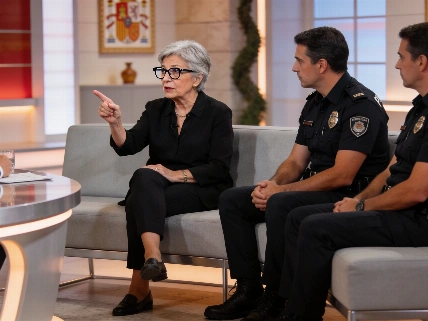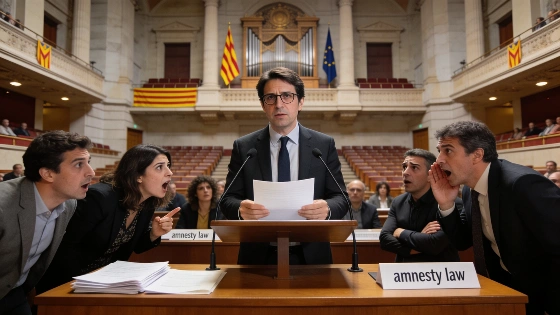
Catalan president Salvador Illa calls on the PP to drop legal actions against the amnesty law. Tensions rise in Parliament over corruption scandals and AP-7 road safety. Budget approval highlights divisions among left-wing allies.
Political tensions escalated in the Catalan Parliament as president Salvador Illa demanded that the Partido Popular (PP) withdraw its 15 appeals against the amnesty law currently before the Constitutional Court. Illa, addressing the chamber during a control session, directly challenged the PP’s stated intention to move beyond the Catalan independence conflict, referencing recent remarks by PP leader Alberto Núñez Feijóo. Illa suggested that dropping the legal challenges would be a genuine step toward turning the page, and urged the PP to recognize Catalan as the region’s language, dismissing claims that it poses any threat.
By focusing on the amnesty issue, Illa sidestepped pointed questions from both Junts and the PP regarding ongoing corruption scandals involving the PSOE. When pressed by PP spokesperson Juan Fernández about his continued support for Pedro Sánchez and José Luis Rodríguez Zapatero, Illa shifted the debate to the PP’s own record on corruption and electoral integrity, criticizing their skepticism toward the electoral process and recent positions on citizenship laws for descendants of Civil War exiles.
The session came just days after a 24-year prison sentence was handed down to José Luís Ábalos, former minister and PSOE secretary general, intensifying scrutiny of the party’s handling of corruption. Junts leader Mònica Sales criticized Illa for refusing to appear before the full Parliament to address the Ábalos case, arguing that explanations offered within the PSOE were insufficient. Illa countered that he had already appeared in the Senate, Congress, and Parliament, insisting he had nothing to hide. Sales, however, accused him of evading direct answers.
Budget negotiations added further complexity. The Parliament is set to approve the first budget of Illa’s term, cementing cooperation between the government and its ERC and Comuns partners. Yet both left-wing groups used the opportunity to distance themselves. ERC’s Josep Maria Jové warned Illa that with new funding in place, excuses for delays would no longer be tolerated, urging him to deliver on security and financing commitments. He specifically called for the convening of the security board to allow Mossos d’Esquadra to oversee airports and for progress on the new regional financing system, cautioning against blaming the far right for any lack of action.
Comuns, meanwhile, pressed Illa to address the growing safety crisis on the AP-7 motorway, now Spain’s most accident-prone highway since tolls were lifted. Jéssica Albiach highlighted a series of recent accidents, including 18 truck fires since 2021, and proposed interim restrictions on heavy vehicles until rail alternatives like Rodalies and the Mediterranean Corridor are improved. Illa, visibly irritated, responded that all parties should reflect on the consequences of removing tolls without a comprehensive strategy, and expressed willingness to study the proposal, while urging Comuns to support new infrastructure projects when needed. Albiach countered that her party had consistently prioritized commuter rail over high-speed lines, to which Illa replied that both were necessary for sustainable transport.
In a related development, the PSC gave up its question time to allow Illa to travel to Madrid for a meeting on the Móra la Nova gigafactory project in Tarragona. The ongoing disputes in Catalonia’s Parliament echo broader national tensions, as highlighted in recent coverage of Catalan parties pressuring the PSOE leadership to address regional demands and prevent the rise of the far right—an issue explored in detail in this analysis of Junts’ calls for Sánchez to step aside.
The AP-7’s safety concerns have become a flashpoint for debate over infrastructure policy in Catalonia. Since the removal of tolls, traffic volumes have surged, leading to increased congestion and a spike in accidents, particularly involving heavy vehicles. The lack of immediate rail alternatives has left authorities searching for interim solutions. Meanwhile, the amnesty law remains a central issue in Spanish politics, with its fate in the Constitutional Court likely to shape relations between Madrid and Catalonia for years to come. The outcome of these debates will have direct implications for regional governance, public safety, and the broader political climate in Spain.