A new park in San Fernando de Henares has sparked protests from residents who lost homes due to Metro Line 7B. Locals demand real housing solutions as authorities focus on green spaces. The conflict highlights unresolved damage and compensation issues.
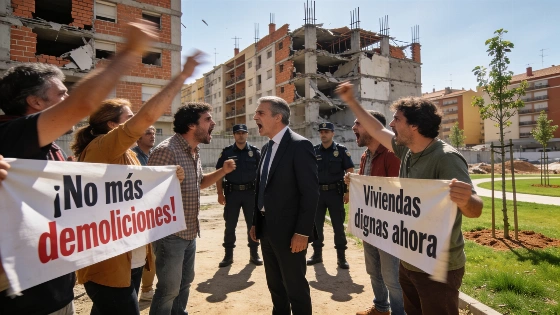
Anger erupted in San Fernando de Henares as residents affected by the Metro Line 7B disaster confronted Madrid’s Transport Councillor, Jorge Rodrigo, during the inauguration of a new park. The event, intended to showcase a 12,000-square-meter green space built on the site of demolished public buildings, quickly turned into a protest. Locals, many of whom lost their homes after the metro’s construction destabilized the ground, gathered with banners and chanted demands for housing instead of parks.
The conflict centers on the long-standing damage caused by the extension of Metro Line 7B, which began in 2007 under the regional government led by Esperanza Aguirre. The project altered the underground composition in San Fernando de Henares, leading to severe structural failures. Over the years, 73 homes have been demolished, and hundreds of families have been left without adequate compensation or alternative housing. Many affected residents are still pursuing legal action, arguing that the indemnities offered do not cover the cost of new homes.
As Rodrigo arrived for the park’s opening, a small but vocal group of residents was blocked from entering the site. Their frustration was heightened by the fact that the new park stands where essential community services once operated, including the Casa de la Mujer, a language school, a municipal theater, and public childcare facilities. According to Alejandro Escribano, spokesperson for the Plataforma de Afectados, the lack of a recovery plan for these lost services adds to the sense of injustice felt by the community.
The regional government, now led by Isabel Díaz Ayuso, has invested over €170 million in attempts to stabilize the area, including injecting concrete into the ground and restoring metro service after a three-year suspension. However, the underlying issues remain unresolved. Nearly 300 additional homes in the affected zone are under evaluation for compensation due to visible cracks and structural concerns, leaving many families living in uncertainty and fear of further deterioration.
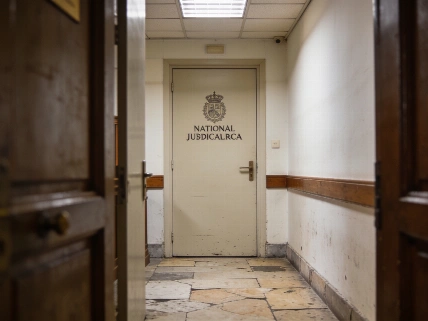
This protest is the latest in a series of confrontations between residents and authorities over the handling of the crisis. The situation in San Fernando de Henares reflects broader challenges faced by Spanish municipalities dealing with infrastructure failures and the social fallout from rapid urban development. Similar concerns about public safety and building conditions have surfaced elsewhere in Madrid, as seen when flooding and ceiling collapses forced the closure of key court facilities in Plaza de Castilla.
San Fernando de Henares, with a population of around 40,000, continues to grapple with the aftermath of the Metro Line 7B project. The loss of homes and public amenities has left deep scars, and many residents remain focused on securing fair compensation and the restoration of essential services. The ongoing dispute underscores the complex legacy of infrastructure projects and the need for comprehensive solutions that address both physical damage and the social fabric of affected communities.
For context, Metro Line 7B was intended to improve connectivity in eastern Madrid but has instead become a symbol of unintended consequences. The affected area’s instability is linked to the interaction of groundwater with saline soil layers, a problem that was not fully anticipated during planning. The case has prompted calls for stricter oversight of major public works and more robust support for those displaced by such failures.