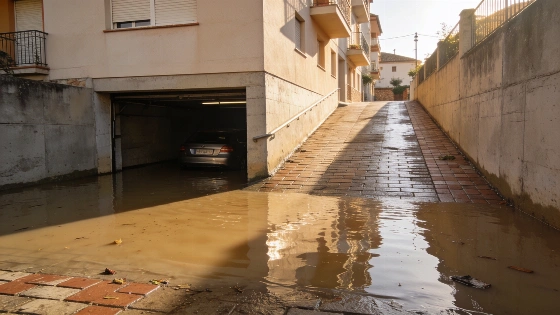
Emergency training should reach children and adults, Pedro Sánchez said in a campaign interview with YouTuber Plex. He cited residents who went down to garages to retrieve their cars as rain began during the 29 October 2024 Valencia floods. Sánchez called those actions dangerous in extreme conditions.
Sánchez used the example to argue that civil-protection awareness should be taught in schools and become more familiar to the wider population. His comments return attention to how people should respond when flooding develops rapidly.
The disaster remains a point of dispute between the central government and the Generalitat. Sánchez was in India on an official visit when floodwater began inundating Valencian municipalities. Four days later, speaking from La Moncloa, he said the regional government should request additional resources if it needed them. The Generalitat retained control of the emergency despite calls for state intervention.
On 3 November 2024, Sánchez visited Paiporta alongside King Felipe and Queen Letizia. Then regional president Carlos Mazón was also there. Residents had spent five days clearing mud from their homes and searching for relatives. Anger in the town prompted Sánchez to leave quickly, while the royal couple and Mazón stayed to speak with residents.
The response has also drawn scrutiny over accountability. No minister in the central government resigned over the disaster, while Sánchez defended his government’s actions and maintained that the Generalitat had chosen to keep control of the emergency. Separate political coverage has addressed Puigdemont’s leadership question.
Recovery figures cited in the account showed that by early June, 21.64% of the €438.6 million transferred for urban water-cycle infrastructure had been spent. Mayors from different political parties, including PSOE mayors, had complained about administrative obstacles delaying the investments. The Spanish Government’s DANA monitoring update reported €16.6 billion in resources mobilized for response and reconstruction. As of 23 November 2026, it recorded a combined €10,051,908,702: €8,293,568,794 paid in grants and aid, €808,144,401 financed or guaranteed, and €950,195,507 spent on direct government actions. The update listed €438,593,866 in urban water-cycle infrastructure aid. It also recorded €268,207,148 in emergency works to recover waterways and hydraulic infrastructure, €108 million allocated to rural-road works, and 3,788 kilometres of roads repaired. The European Commission approved €946 million for Spain from the EU Solidarity Fund for emergency response, rehabilitation and reconstruction. The government update also reported €34.17 million paid to municipalities for flood-risk adaptation and €59,881,285.76 in aid resolved for those projects. A further €273 million from the EDIL DANA plan had been assigned to 95 local authorities for reconstruction and modernization.