The draft amendment to Spain’s Reglamento General de Circulación remains unapproved, although vehicles can already be tested on open roads under a DGT instruction in force since July 2025. Instruction VEH 2025/07 established the Safety and Technology Evaluation Framework Programme for Automated Vehicles (ES-AV). It requires applicants to meet safety and technical requirements before tests are authorised. Anfac says the missing rules are holding back commercial autonomous services.
Permission to test a vehicle does not provide a route to operating a service for customers. The ES-AV framework covers experiments on roads open to general traffic; the pending amendment to the Reglamento General de Circulación is meant to regulate autonomous circulation in defined or controlled settings. The manufacturers’ association wants a clear timetable for legislation that would let autonomous cars circulate in defined settings and move beyond pilot projects.
At AUCON, the first National Congress on Autonomous and Connected Vehicles, held at Mobility City in Zaragoza on 24–25 November 2026, Anfac director general José López-Tafall argued that Spain and Europe risk losing ground to the United States and China. Anfac and Fundación Ibercaja organised the congress, which brought together more than 300 participants. They represented public authorities and manufacturers, as well as mobility operators, technology companies and research centres. López-Tafall said the industry had focused heavily on electrification and decarbonisation, even as autonomous and connected vehicles became increasingly important to the car industry’s future.
López-Tafall cited more than 20 million autonomous-vehicle journeys in the United States, including about 450,000 a week. Comparable services have yet to reach Spanish streets, he said, warning that Europe could become reliant on foreign companies for mobility services and automotive software. International coverage also reported that Waymo had surpassed 300 million driverless miles, operated in 15 cities and exceeded 500,000 paid journeys a week in June. The company was targeting one million weekly journeys by the end of 2026.
Anfac’s fifth Barometer on Autonomous and Connected Vehicles 2026 shows a gap between what cars can do and what the market can deploy. It reports that 79% of models sold in Spain can be bought with SAE 2 automation, which can control steering and speed together through driving assistance systems. SAE 3 is available on 11% of models; the driver remains responsible and must be ready to take control. Another 26% are at SAE 1, while 16% remain at SAE 0. These figures measure technology available across vehicle models, not the share of cars operating autonomously.
The figures cover equipment available across models, not driverless cars operating without restrictions on public roads. SAE 4, which permits operation without driver intervention within a defined area, is the level used by most of the 16 open-road test initiatives registered by the DGT, up from 10 the previous year. The projects include two robotaxi initiatives in Madrid associated with Waymo and Avomo Cars. Other registered projects are an autonomous bus in Leganés and a shuttle in O Porriño, Pontevedra; FCC Medio Ambiente is testing an autonomous street sweeper in Barcelona.
Spain’s rules on alcohol-interlock equipment also vary by vehicle type; an earlier report explains that active devices are required only in certain professional buses. For autonomous vehicles, the pending circulation rules remain the step between permission to test and commercial operation.
Connectivity is a more immediate business priority for manufacturers, according to the barometer. On a 100-point scale, they rate it at 79 for light vehicles, compared with 55 for automation. In heavy vehicles, the respective scores are 74.5 and 50. Android Auto and Apple CarPlay are available in 98.9% of passenger-car models, while predictive maintenance using artificial intelligence reaches 24.5%. AUCON discussions also covered cybersecurity risks to vehicle communications and the legal treatment of data collected by vehicles.
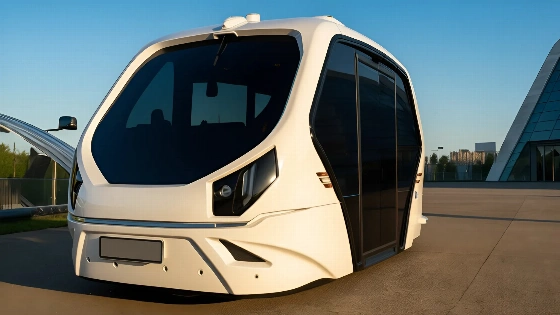
Manufacturers rate fragmentation and a lack of clarity in European regulation as the biggest barrier, at 8.1 out of ten. They also point to administrative hurdles for pilot tests and differences in road signs between countries. European vehicle type approval adds a separate regulatory layer: approval of automated-driving functions and national circulation rules address distinct requirements. At AUCON, demonstrations featured a CTAG electric shuttle bus with SAE 4 automation on routes in Zaragoza. They did not amount to unrestricted commercial robotaxi operation.