Pedro Sánchez separates the Ábalos case from investigations involving his wife and brother. At Harvard, he blamed the right and far right for a campaign against his government.
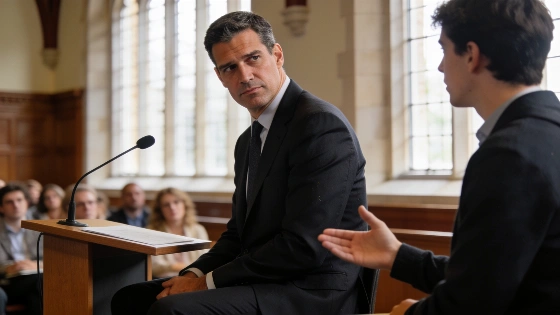
Pedro Sánchez used his appearance at Harvard to separate the corruption case involving former minister José Luis Ábalos from the investigations into his wife, Begoña Gómez, and his brother, David Sánchez. He said the family cases were not corruption scandals. He blamed what he called a campaign by the right and far right to bring down his government.
That distinction drove a tough exchange with students. Sánchez accepted that corruption cases involving his party and government exist. He said his administration had acted quickly and effectively. But he refused to place the investigations involving his family in the same category as the case linked to José Luis Ábalos.
On 21 September 2026, the court investigating Begoña Gómez opened oral proceedings against her over alleged influence peddling and misappropriation, according to RTVE. The opening of a trial does not itself establish guilt.
The prime minister also objected to what he called personal attacks. He said it was hard to accept that his wife and brother could be treated as guilty before the investigations had established that. He insisted they were not responsible for wrongdoing. Sánchez described the issue as dirty politics, not corruption.
He placed the case involving David Sánchez in the same political frame. Fresh reports on the exchange did not identify a new official ruling that changed the existing judicial context.
The setting made the exchange more pointed. As the earlier forum showed, students at Harvard focused less on the academic agenda than on disputes surrounding the Spanish government. RTVE and ARA English said the questions centered on corruption allegations, the family investigations and the Pegasus affair.
Pegasus brought another challenge. A student asked whether the hacking of Sánchez's phone and the phones of several ministers, attributed to Morocco in the political debate, had affected Spain's change of position on Western Sahara.
The European Parliament’s PEGA committee, in its final report of May 2023, referred to Morocco as a possible source or client in some Pegasus episodes. That assessment did not amount to an official legal finding that Morocco was responsible for the attack on Sánchez’s phone.
Sánchez confirmed that the Pegasus intrusion had happened. He stressed that its perpetrator was unknown. An investigation had been opened, he said, and a complaint had been filed. His decisions could be criticised, the prime minister added, but they did not show dependence on another country or a failure to defend what he considers Spain's interests. Recent reports also said that no perpetrator had been publicly identified.
He defended the government's position on Western Sahara by pointing to its support for a United Nations resolution establishing an autonomous region within Morocco. He also said Spain was the country most committed to funding humanitarian aid for the Sahrawi people. Sánchez said he did not need to answer what he called false news. He challenged anyone with relevant information to make it public.
Sánchez left Harvard with two separate arguments. On corruption involving the PSOE and the government, he claimed a rapid institutional response. On the cases involving his family, he rejected the label and blamed the opposition's campaign.
That was the main message of his intervention. Sánchez accepts scrutiny of his government, but rejects the attempt to use the investigations involving Begoña Gómez and David Sánchez as proof of corruption. The distinction is politically clear. The questions behind it remain part of the public dispute.