Pedro Sánchez’s appearance in Congress to address Ceuta led to sharp exchanges and personal attacks. The debate exposed deep divisions and little movement among lawmakers.
Congress turned combative as Pedro Sánchez addressed the chamber on Ceuta. What was meant to be a policy discussion quickly became a series of personal attacks and political posturing, with little real debate on display.
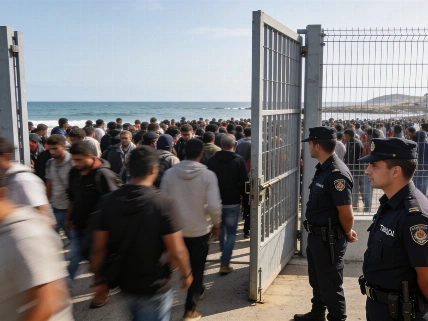
Alberto Núñez Feijóo and Santiago Abascal used the session to go after Sánchez, moving past the Ceuta crisis to deliver pointed criticism. Feijóo called for Spain to be "returned to the Spaniards," blurring the line between campaign talk and direct demands. Abascal called Sánchez "Nerón con TikTok," a jab that landed more for its showmanship than substance. According to Euronews and Democrata, the session was called in response to the recent migrant influx in Ceuta at the end of July and growing pressure on the government to explain its actions.
On August 21, the Spanish government summoned Morocco's ambassador in Madrid to protest statements by two Moroccan ministers asserting sovereignty over Ceuta and Melilla.
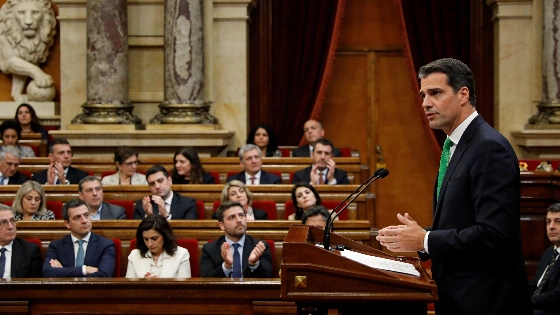
Sánchez opened with a nod to the lions at the entrance of Congress, skipping the usual Monterroso dinosaur reference. His speech laid out a timeline and confirmed the summoning of Morocco’s ambassador after two ministers' statements, but he avoided admitting any government mistakes. Applause from his own party followed, but the lack of self-criticism was noted. Morocco World News reported that Sánchez said the government had received signals and reports, but no specific warning from the CNI (National Intelligence Center) about the scale of the migrant entry—a point that became central in the debate.
As the session wore on, Aina Vidal and Enrique Santiago criticized both the opposition and the government, showing frustration with both sides. Gabriel Rufián, speaking after Vidal, downplayed his own remarks, focusing on his tan and clothes rather than Morocco. By then, many deputies had tuned out, some reaching for snacks as the debate dragged on. The Ministry of Foreign Affairs, according to El Constitucional, responded to Moroccan claims by restating that Ceuta and Melilla are part of Spain and that dialogue with Morocco is necessary to manage the crisis.
In reality, only a small part of Spain’s nearly fifty million people paid close attention to the outcome. Most citizens, already set in their opinions or uninterested, watched from a distance or not at all. The debate, for all its drama, had little effect outside the chamber.
The parliamentary dispute extended beyond Ceuta itself, with opposition parties demanding explanations for the government's crisis management, border control measures, and Morocco's role. The issue has also reached the European stage, as MEPs from EPP and Patriots for Europe staged a protest in Brussels, criticizing Spain's government for insufficient protection of national sovereignty.
The day’s proceedings were more performance than reckoning—aimed at politicians, journalists, and speechwriters. The real issues, including Spain’s relationship with Morocco and the handling of Ceuta, were overshadowed by political maneuvering and a reluctance to look inward. The session showed a political class more interested in scoring points than dealing with the complexities of governing. For most Spaniards, the debate changed little. Daily life continued, and the disconnect between politicians and the public was clear.
Ceuta, a Spanish city on the north coast of Africa, has long been a sensitive point in Spain’s dealings with Morocco. Its status and the migration challenges it faces are often used in diplomatic disputes. The government’s handling of recent events in Ceuta has drawn criticism from both the opposition and some coalition partners, but the lack of real debate in Congress suggests that positions are unlikely to change soon. For most people in Spain, these debates have little impact, and life goes on much as before.