

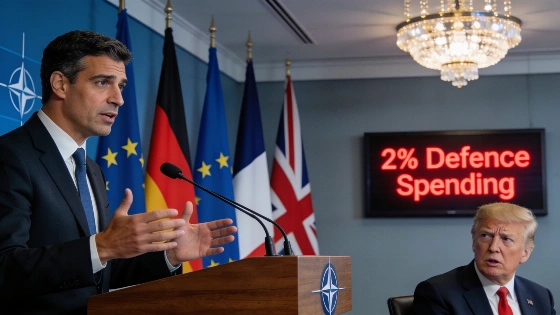
Spain’s pledge to raise defence spending to 2% of GDP at the NATO summit led Donald Trump to reverse his earlier criticism. The Spanish government insists no new commitments were made, but the US president’s tone changed after hearing Sánchez.
Spain’s position at the recent NATO summit took a decisive turn after President Pedro Sánchez directly addressed concerns over the country’s defence spending. In a high-stakes plenary session, Sánchez outlined Spain’s commitment to increasing military expenditure to 2% of GDP, a move that prompted US President Donald Trump to abandon his earlier confrontational stance. Trump, who had previously labelled Spain a “terrible partner” and threatened to sever trade ties, shifted to a notably more conciliatory tone after hearing Sánchez and other European leaders.
According to government sources, Sánchez used his allotted three minutes to detail the scale of Spain’s recent defence investments. He emphasised that under his leadership, Spain has significantly boosted its military budget, meeting the 2% target and committing to join a NATO mission in Finland aimed at Arctic security. This direct explanation, coupled with public praise from leaders such as Turkey’s Recep Tayyip Erdogan for Spain’s deployment of Patriot missile batteries, appeared to influence Trump’s mood during the summit.
While Trump had opened the summit with harsh criticism of European allies and their perceived lack of commitment, his closing remarks were markedly different. After listening to Sánchez and others, Trump described the atmosphere as filled with “a lot of love” and expressed satisfaction with the progress made. Sánchez, in his post-summit press conference, reiterated that Spain’s defence spending has grown fivefold compared to GDP growth, with 44% of the €35.5 billion defence budget allocated to new equipment—well above the NATO average of 20%. He also highlighted Spain’s ongoing military presence in Turkey, which has been acknowledged by several member states.
Despite Trump’s unpredictable shifts, Spanish officials remain focused on the country’s actual commitments. They stress that no new pledges were made beyond the previously announced 2.1% of GDP, and dismiss the likelihood of unilateral US reprisals, noting that trade agreements are negotiated at the EU level. The government maintains that the spending ceiling will not exceed 2.1% as long as Sánchez remains in office, firmly rejecting any suggestion of raising it to 5%.
German Chancellor Friedrich Merz echoed this account, stating that Trump’s change in attitude followed Sánchez’s explanation of Spain’s efforts to meet NATO targets. Merz confirmed that the Spanish government’s approach was well received by the US president during the plenary session. The only new element was Spain’s participation in the Finland mission, while the rest of Sánchez’s message remained consistent with previous public statements.
Spain’s evolving role within NATO has drawn attention in recent years, particularly as the alliance adapts to new security challenges. The country’s increased defence spending and active participation in multinational operations reflect a broader trend among European members to share more of the alliance’s burden. This shift comes amid ongoing debates about the future of transatlantic relations and the distribution of military responsibilities. For context, Spain’s growing involvement in international security matters has also been highlighted in other areas, such as its naval deployments during key US commemorations, as reported in coverage of Spanish warships joining US Independence celebrations. These developments underscore the practical impact of Spain’s defence policy decisions on its standing within NATO and its relationship with the United States.



