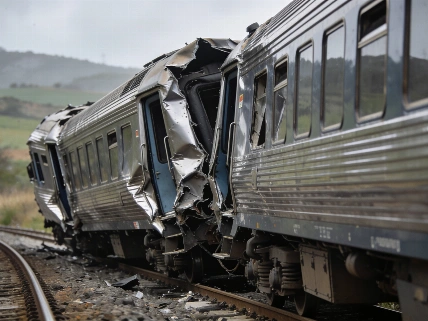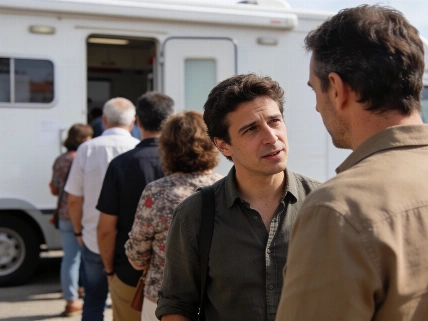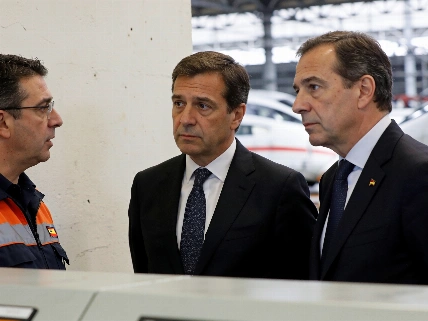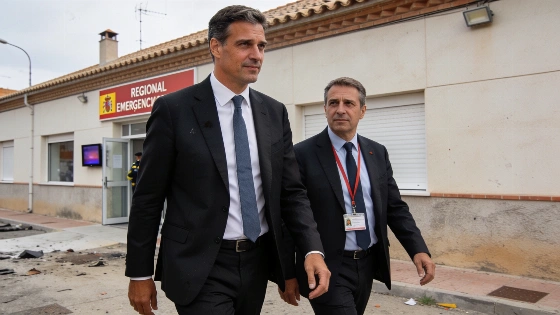
At the CECOPI in Toledo, officials were assessing the Urda crash, which had left 69 people dead by the time Pedro Sánchez visited. On 28 October, the Renfe AVE train collided with a stationary Iryo high-speed train near Urda, on the Madrid to Andalusia corridor. More than 100 people were injured. Sánchez said the accidents at Urda and Adamuz had broken public confidence in the railway system and pledged measures to strengthen high-speed rail.
This was Sánchez’s third visit to Toledo province in 48 hours. He had gone to the command post at Urda on the day of the crash, then attended the CECOPI the previous day. Interior Minister Fernando Grande-Marlaska accompanied him, as did the president of the Junta de Comunidades de Castilla-La Mancha. Óscar Puente, the Minister of Transport and Sustainable Mobility, was absent.
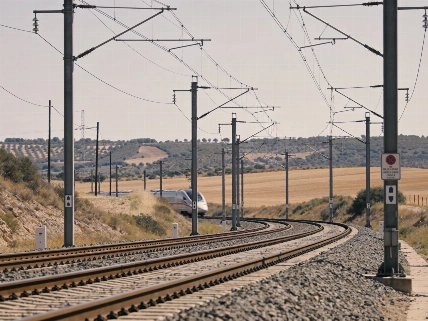
A Renfe AVE train struck an Iryo train stopped on the track towards Seville; at least 69 people had died. Preliminary accounts described a failure in the LZB train-management system along about 63 kilometres of track. NPR reported that the failure occurred at about 8:30 a.m. The collision followed at approximately 8:53 a.m. Transport Minister Óscar Puente said the command centre authorised the Renfe train to resume without speed restrictions after trains had stopped automatically. He called the instruction “inexplicable.” The government said the investigation was continuing to establish the cause and that it was working to provide information as soon as possible. Sánchez did not discuss Puente’s absence.
An earlier report covered pressure on the transport minister and Sánchez’s position after the crash. The PP called for Puente to resign or be dismissed. The government had backed him through Thursday despite criticism from opposition parties and parliamentary partners. Railway unions called for investigators to look beyond a single controller and examine broader institutional and safety-system issues.
The Urda collision was Spain’s second major high-speed rail crash of 2026. In January, a collision between Renfe and Iryo trains near Adamuz, Córdoba, killed 46 people; that investigation remained open. Spain’s high-speed network carried about 45 million passengers in the preceding year. The Urda crash is being examined through a technical railway-accident inquiry and a judicial investigation. The Transport and Interior ministries are also involved in reconstructing events.
At his first appearance after the Urda crash, on Wednesday, Sánchez said two accidents of this scale in one year were unacceptable for a country with a strong high-speed rail network. He promised measures to reinforce the system but did not specify what they would be. He thanked public servants working at the accident and people in Castilla-La Mancha for their solidarity.