Seat is negotiating for a larger electric model at Martorell. The Audi Q4 e-tron could arrive from 2032, but Volkswagen has approved no allocation.
Martorell’s second production line could take on the Audi Q4 e-tron from 2032. The electric SUV and its Q4 e-tron Sportback sibling are currently built in Zwickau, one of four German factories whose future Volkswagen has questioned. A second large electric model could also go to Barcelona, although no final allocation has been made.
The decision matters because Martorell needs vehicles with stronger profit margins. Volkswagen is preparing a major reduction in capacity and model range, while Seat’s management has intensified talks with the German group. Seat expects a new allocation to be announced next year. The proposal remains a scenario under discussion, not a confirmed Audi or Volkswagen production programme.
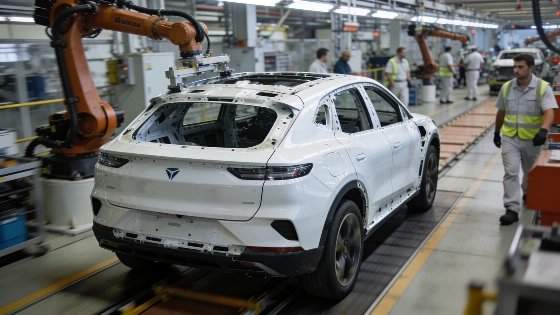
Martorell is being developed as a mixed-production site: one line is preparing the electric Volkswagen ID. Polo and Cupra Raval, while two other lines continue to handle combustion-engine and hybrid vehicles.
The Q4 e-tron would give the Catalan factory a larger electric vehicle after its latest award focused on smaller models. Martorell is preparing the Volkswagen ID. Polo and the Cupra Raval as the first fully electric city models produced at the site. Volkswagen invested 3.000 million euros to install the MEB+ platform.
Those cars start slightly above 25.000 euros without subsidies. Their margins are tight because electric vehicles generate lower profits than combustion models, according to Seat chief executive Markus Haupt. The company expects that position to improve as European emissions rules advance, electric sales grow and battery technology becomes cheaper.
Seat is already calculating the cost and internal changes required to build the Q4 e-tron on Martorell’s second line. Under the scenario being studied, the Formentor would move to the third line. That space would be freed by the Ibiza and Arona.
The Martorell transition forms part of Future: Fast Forward, a wider industrial programme whose total investment has been estimated at about 10 billion euros. The site is therefore receiving electric models while retaining combustion-engine and hybrid production instead of becoming an exclusively electric factory.
The shift would put more pressure on the factory’s older programmes. The Formentor reached the market in 2020 and received a redesign in 2024. The Ibiza and Arona date from 2017, with no new versions expected.
Martorell is currently operating three lines at a strong pace. The ID. Polo and Cupra Raval run on the first. The Formentor and León use the second, while the Ibiza and Arona occupy the third.
Volkswagen’s wider industrial backdrop is severe. The group plans to cut global production capacity from 12 million to nine million vehicles a year. It also intends to reduce its range by 50% and make another 50.000 employment cuts by 2030 through dismissals, early retirements and voluntary departures. The group has raised the possibility of closing the German plants in Emden, Hannover, Neckarsulm and Zwickau.
Volkswagen has not approved the closure of Zwickau, yet it has not guaranteed the plant a competitive workload after 2030. The current scenario envisages concentrating production on one line from 2027. The site’s longer-term role will be decided through the group’s future production concepts.
Independent reporting indicates that Zwickau may lack a confirmed successor programme after 2030. That makes the Q4 e-tron one of the products for which Volkswagen is examining an alternative location.
The same capacity problem extends beyond Zwickau. Volkswagen is reviewing alternative uses for Emden, Hannover and Neckarsulm because competitive follow-up workloads have not been guaranteed for the 2031 to 2034 period. According to Volkswagen’s revised industrial strategy, greater flexibility between electric, combustion-engine and hybrid production should help factories respond to uneven demand.
That restructuring directly affects Seat’s long-term position. Volkswagen has said it cannot guarantee the Spanish brand’s continuation beyond 2030. Tighter regulation, electrification costs and the investment needed for a new generation of electric models make further spending on Seat increasingly difficult to assess.
Unions want the Barcelona site to build larger vehicles and have demanded a second electric production platform. UGT has also called for more Cupra models to be brought back from plants abroad.
The Tavascan is built in China. The Terramar is made in Hungary, while the Born is produced in Zwickau. Company sources say the three cannot currently be transferred because they use different platforms.
Audi faces its own production decisions. The premium brand must resolve the future of Neckarsulm and deal with a 1.300 million euro negative impact on its 2025 accounts from United States tariffs. Audi has therefore considered manufacturing in the United States, according to its president Gernot Döllner.
Audi has also launched the A2 e-tron as its new entry-level electric model. The Q4 e-tron remains its best-selling electric vehicle.
The proposed allocation would give Martorell a valuable industrial opportunity without guaranteeing a rescue. A large Audi model could strengthen the plant’s electric future and answer demand for higher-margin vehicles. The plan remains tied to negotiations inside a group cutting capacity and reviewing Seat’s survival beyond 2030.
Martorell needs the Q4 e-tron or another comparable programme because its current small-car award does not remove pressure on its older lines. The talks remain the clearest route to stability for the factory, while Volkswagen has yet to settle Seat’s future.