Plus Ultra Auditor Rejects Pressure During Account Review Before State Aid. The Plus Ultra auditor told the Senate that the company did not ask to modify the report to secure state aid. He confirmed liquidity problems existed two years before the pandemic. Investigators are examining how the €53 million in state support was used.
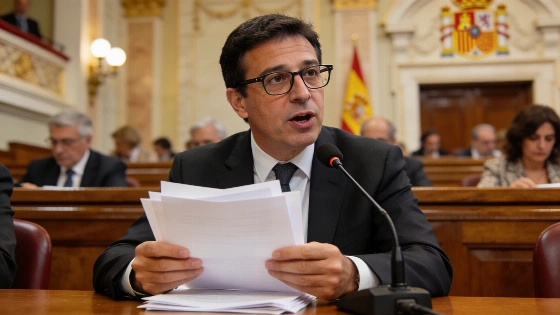
Proceedings over state support for the airline Plus Ultra continue in Madrid. At Senate hearings, the company’s auditor Jesús Ángel Carbajo stated that he had not faced any attempts at pressure or requests to alter reporting for the sake of obtaining government aid. According to him, the management of Plus Ultra provided all necessary information, and the audit conclusions were based solely on the data received.
Carbajo emphasized that even two years before the pandemic began, the airline was already experiencing serious liquidity problems. However, he claims that when preparing the 2019 audit report, he was not aware of any plans by Plus Ultra to seek state support. In the document, auditors specifically highlighted a “material uncertainty” and outlined risks associated with the carrier’s financial situation.
Questions regarding the procedure for allocating €53 million in state aid to Plus Ultra arose after the Audiencia Nacional launched an investigation into possible misuse of these funds. The inquiry is examining whether the company met the criteria for receiving support, in particular—whether it was financially stable at the onset of the pandemic. Under the program’s conditions, state aid was provided only to strategic companies that entered the crisis with a stable balance sheet and were able to submit a detailed recovery plan.
Senator from the People's Party, Salvador de Foronda, reminded at the hearing that the expert opinion indicated Plus Ultra's lack of liquidity even before the pandemic, which could have prevented it from receiving state support. Carbajo replied that he was not familiar with this conclusion and emphasized the difference between an audit and an expert analysis. He also noted that the decision to allocate funds was made by government authorities, not the auditor.
The court ruling states that Plus Ultra was in a condition close to liquidation a year before receiving aid, and that part of the funds could have been transferred to companies unrelated to the airline's core operations. In particular, investigators focused on the repayment of a loan to the Panamanian entity Panacorp shortly after the state support was received. Carbajo explained these transactions as necessary for servicing the company's debts and stressed that evaluating the targeted use of funds was not within his mandate.
During the hearings, the role of former Prime Minister José Luis Rodríguez Zapatero was also discussed; according to some participants in the proceedings, he may have influenced the decision to support Plus Ultra. This aspect was examined in detail in another article, which analyzed Zapatero's connections with financial structures and the circumstances surrounding the airline's bailout — more about this can be found in the publication on the investigation into the influence surrounding Zapatero and Plus Ultra.
For reference: the support program for strategic companies in Spain involved strict oversight of fund usage, mandatory participation by SEPI (Sociedad Estatal de Participaciones Industriales), and regular audits. Plus Ultra, despite having a small fleet and a limited number of routes to Latin America, was recognized as strategically important for the country. Questions about the transparency of fund allocation and company selection criteria remain a matter of public and judicial scrutiny.