Spain’s housing debate has erupted after key government decrees were blocked in parliament. Tenant unions are now calling for mass demonstrations, demanding lower rents, action against investment funds, and an end to evictions. The political fallout leaves the country’s rental market in limbo.
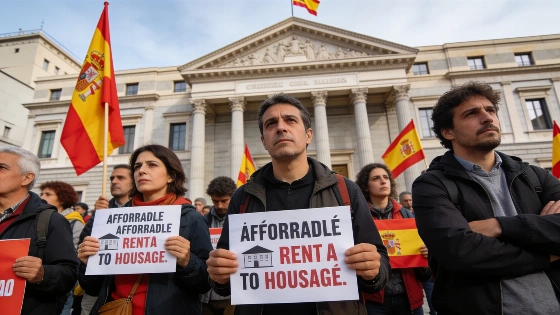
Spain’s tenant unions wasted no time. Hours after parliament blocked two major housing decrees, the Sindicato de Inquilinas called for protests in more than fifty cities. They want lawmakers to feel the heat. The plan: fill the streets this weekend and show just how angry renters have become.
The reason is simple. On Tuesday, PP, Vox, and Junts joined forces to vote down the government’s housing plans. The numbers were close. Reuters reported the first decree lost 178 to 172. The second failed 184 to 166. Junts tipped the balance both times. The union’s message is blunt: “Hacia la huelga general.” If politicians ignore them, they’re ready to ramp up the fight.
The rejected housing packages included a proposal to extend eviction protections for vulnerable tenants until 2030 and to tighten regulations on short-term rentals and speculative property purchases by investment funds.
Tenant groups have three main demands. They want lower rents. They want the government to take properties from so-called “vulture funds.” And they want evictions to stop for good. These points have become the rallying cry for renters who say the market is stacked against them.
Madrid will see the first big protest on Saturday at noon. The city was the starting point for Spain’s first protest camp against poor housing. Salamanca, León, Santiago de Compostela, and dozens more cities will join in. The union’s plan is to keep up the pressure all weekend. They want to make sure this fight doesn’t fade away. Al Jazeera reported that anger in Madrid spiked after an 87-year-old woman was evicted last month. That case has become a symbol for the movement.
Prime Minister Pedro Sánchez is silent for now. He’s in a period of “reflection,” deciding if he should call early elections after the defeat in parliament. This political limbo only adds to the tension. Renters and landlords are left guessing what comes next.
The housing decrees were officially published in Spain’s government gazette on September 30 and October 1, with the parliamentary vote taking place on October 2, 2026. International agencies note that the government’s defeat has increased speculation about possible snap elections and heightened instability around Spain’s housing agenda.
Calls for expropriation and rent controls have echoed in Spain for years. But this wave of protests comes at a time when new laws seem stuck. As reported earlier, the left has slammed opposition parties for siding with investment funds instead of struggling tenants. The anger is real.
The next few days will show if mass protests can force a change. Right now, the government’s housing plans are frozen. The rental crisis drags on. This weekend’s turnout will reveal how much power tenant groups really have—and if Spain’s leaders are ready to act, not just talk.