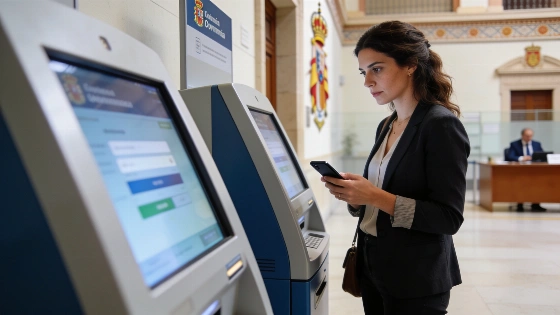
From July 16, Spain’s State Public Employment Service (SEPE) officially recognizes new ways for citizens to identify themselves online and by phone. These include temporary codes sent to registered mobile numbers or email addresses, as well as the use of contrast data. But, anyone applying for unemployment benefits through SEPE’s online portal still needs advanced digital identification, such as a digital certificate, DNIe or Cl@ve.
The change follows a resolution published in the BOE on July 15, 2026, authorizing SEPE to accept a wider range of identification methods for submitting documents and requests. Alongside established systems such as Cl@ve and electronic certificates, the structure introduces single-use codes and secure verification references. These make certain processes more accessible to users without advanced digital credentials. SEPE provides information on unemployment benefits and offers digital procedures through its personal area, as well as in-person appointment services.
Temporary Codes: New, But Not Universal
Despite the expanded legal structure, the practical impact is limited for now. SEPE’s official site for unemployment benefit applications still lists a digital certificate, DNIe or Cl@ve as mandatory for submitting a claim online. The BOE clarifies that each SEPE service will specify which identification methods it accepts. The new options will so be rolled out gradually and may vary by procedure.
As of August 13, 2026, anyone seeking to apply for unemployment benefits online must use one of the advanced digital ID systems. If Cl@ve is used for a process requiring a digital signature, the phone number must match the one registered in the Cl@ve system. That leaves a gap between the regulatory change and its real-world implementation: a broader choice of identification does not mean every procedure accepts every method.
Where the New Methods Apply
Some SEPE services have already adopted the new identification options. For example, users can now check the status of their unemployment benefits instantly with a one-time SMS code, provided their contact details are up to date. To apply for benefits, but, the system redirects users to the electronic portal, where stricter ID requirements still apply. Access depends on the specific service: checking information and filing a benefit claim are separate procedures with different authentication requirements.
For people with limited work histories, SEPE has also introduced new support measures, including the €570 monthly subsidy for workers with at least 90 days of contributions, as detailed in this recent report. Access to contributory unemployment benefits generally requires at least 360 days of prior contributions and compliance with other eligibility criteria.
How Identification and Signature Will Work
Once SEPE activates the new systems for more procedures, users will be able to receive single-use codes via their registered mobile or email. They can provide the codes during phone calls or in online forms to verify their identity. Electronic forms may also let users confirm their intent to sign by entering a temporary code, with all actions recorded in the administrative file for traceability. The resolution also mentions future use of biometric systems, which will take effect only once operational and fully compliant with legal safeguards.
For now, SEPE’s regulatory update lays the groundwork for broader digital access, but the pace of change will depend on how quickly each service adapts. Anyone planning to apply for unemployment benefits online should check the identification requirements for their chosen procedure at the SEPE Electronic Office, which is regularly updated with the latest information.