Tana Rivera chooses El Rocío look with a nod to the Alba family. Tana Rivera appeared at El Rocío in an outfit inspired by her mother's iconic dress. Designer Rocío Peralta adapted the Feria de Abril style for the pilgrimage. Family traditions received a fresh interpretation.
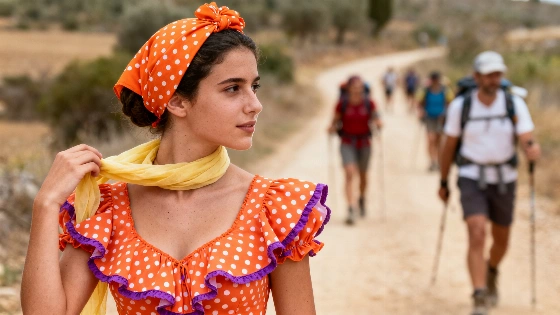
In Seville, Tana Rivera attracted attention with her unusual outfit for the El Rocío pilgrimage. She wore a batiste bata created by Rocío Peralta, which clearly references the famous dress her mother, Eugenia Martínez de Irujo, wore at the Feria de Abril. The new look is not an exact copy of the original, but retains its recognizable features: a vivid orange color, large ruffles, and contrasting trims.
Unlike the classic Feria dress, Tana's outfit is adapted for the conditions of the pilgrimage: a loose cut, comfortable fit, and practical details. The color palette leans towards coral, while white polka dots and purple piping make the look less formal. This approach preserves the family’s aesthetic while making it suitable for the long journey to El Rocío.
Special attention was drawn to the accessories. Instead of the traditional mantoncillo, Tana opted for a piquillo rociero—a light, narrow scarf that is convenient for travel. Its yellow hue is different from the bright lemon mantoncillo worn by Eugenia Martínez de Irujo at the Feria de Abril, but both elements highlight Andalusian style and serve as focal points in the look.
Tana’s headwear—an orange scarf with white polka dots—also nods to pilgrimage traditions. This accessory not only completes the ensemble but is also practical: it protects from the sun and dust, which is especially important on the road to El Rocío. Unlike the floral ornaments of the Feria, the scarf looks both natural and functional for the pilgrimage setting.
Family traditions in fashion often become a topic of discussion in Spain. Just like Aitana’s concerts, which draw thousands of spectators and become notable cultural events, interest in the style and symbolism of national holidays remains strong. Outfits inspired by family history emphasize the continuity and relevance of Andalusian traditions.
El Rocío is one of the largest pilgrimages in Spain, attracting tens of thousands of participants every year. For many Andalusians, choosing what to wear for this event is not just a matter of style, but also a way to show respect for family roots and regional culture. Designers such as Rocío Peralta continue to develop traditional motifs, offering modern interpretations of classic looks.